
Best Laser Pointer for Astronomy: Complete Stargazing Guide
A laser pointer for astronomy makes it easier to identify stars and constellations during stargazing sessions. This guide explains why green lasers are preferred, how beam visibility works, and how far an astronomy laser pointer can reach. Learn the science behind wavelength, beam divergence, and safe laser usage in astronomy.
Image Gallery
Summary: Laser pointers are widely used in astronomy education to help observers identify stars and constellations in the night sky. This guide explains why astronomers use laser pointers, how beam visibility works, and why green lasers are often preferred for stargazing. It also covers important safety guidelines and key features to consider when choosing an astronomy laser pointer.
For many astronomy enthusiasts, identifying stars and constellations in the night sky can be surprisingly difficult. The sky contains thousands of visible stars, and explaining the exact location of a specific object is not always easy.
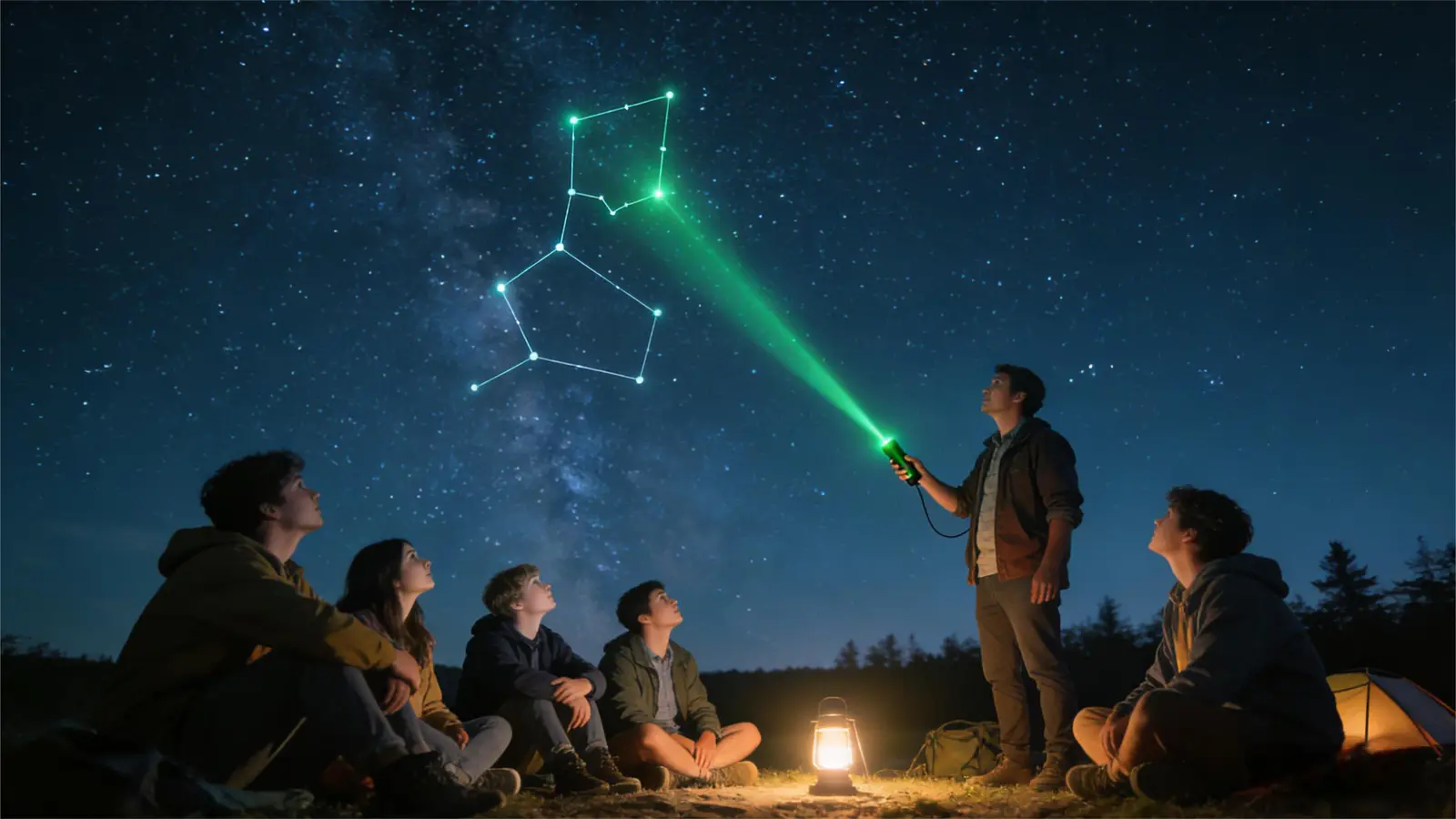
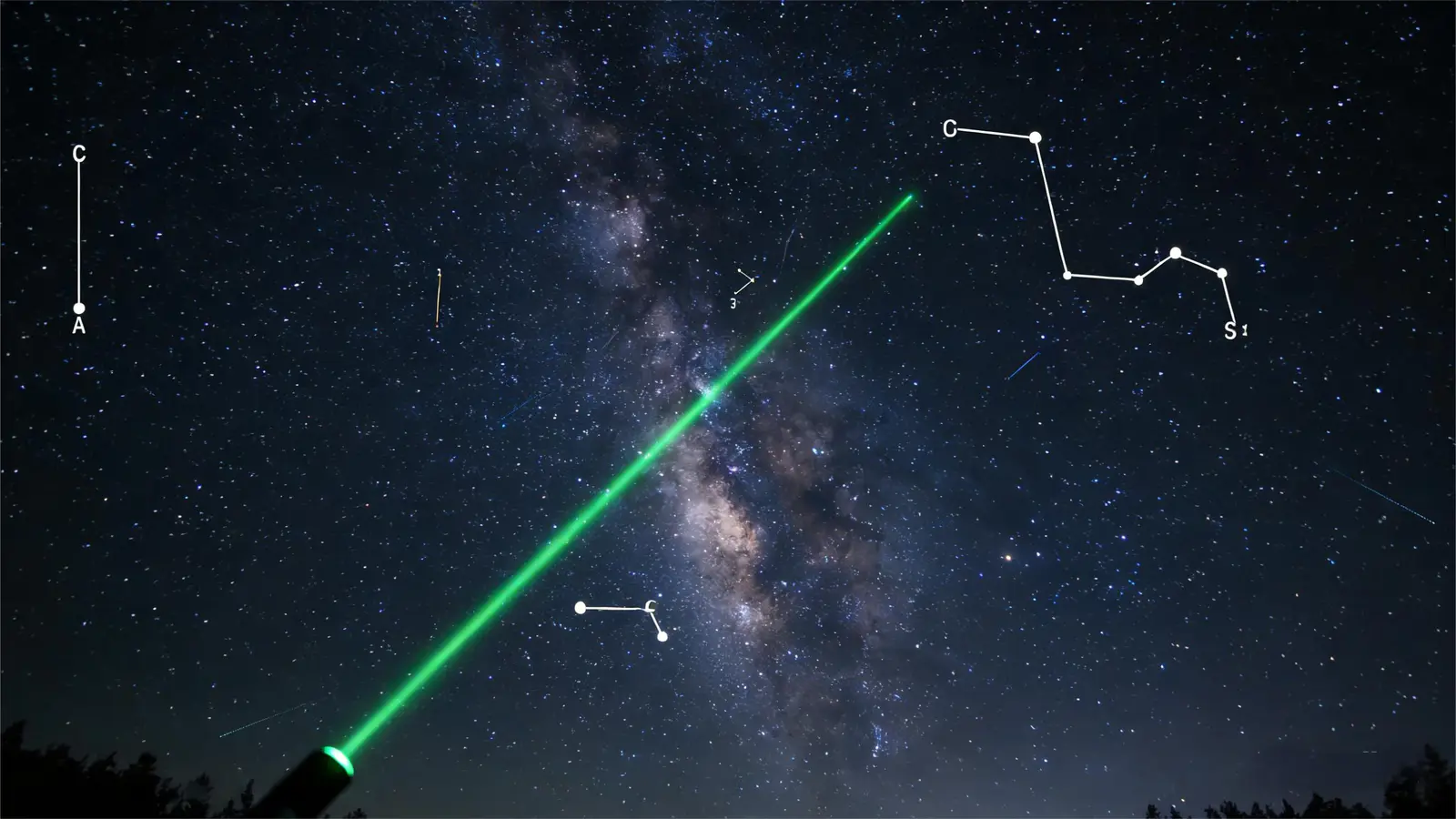
This is why an astronomy laser pointer has become a popular tool among amateur astronomers and educators. Instead of describing the position of a star verbally, a laser beam creates a visible line in the sky that allows observers to easily follow the direction.
Laser pointers are frequently used during public stargazing events and astronomy education programs. When used responsibly, they make learning the night sky easier and far more engaging.
If you are new to laser safety, you may also want to read our guide: The Complete Guide to Laser Pointer Safety.
Why Astronomers Use Laser Pointers
Astronomy often involves locating celestial objects that are extremely far away. Even experienced observers sometimes find it difficult to explain the exact position of a star or constellation to beginners.
A laser pointer for constellations solves this problem by creating a visible beam that appears to extend from the observer toward the target star.
Organizations such as NASA and astronomy outreach programs sometimes use laser pointers during public observation events to help audiences identify stars and constellations.
Common uses include:
- Identifying constellations
- Pointing out planets
- Teaching beginners how to navigate the night sky
- Guiding telescope alignment
What Makes a Laser Pointer Good for Stargazing
Not every laser pointer is suitable for astronomy. Several optical characteristics determine whether a laser beam will be visible and effective in the night sky.
The most important factors include beam visibility, wavelength, beam divergence, and build quality.
Beam Visibility
The most important feature of an astronomy laser pointer is how visible the beam appears in the air.
Laser beams become visible because tiny particles in the atmosphere scatter small amounts of light toward the observer. Dust, water vapor, and microscopic aerosols all contribute to this effect.
Under dark sky conditions, this scattered light can make the beam appear as a clear line stretching into the sky.
Wavelength
Laser wavelength determines the color of the beam and how bright it appears to the human eye.
| Laser Color | Typical Wavelength |
|---|---|
| Red | ~650 nm |
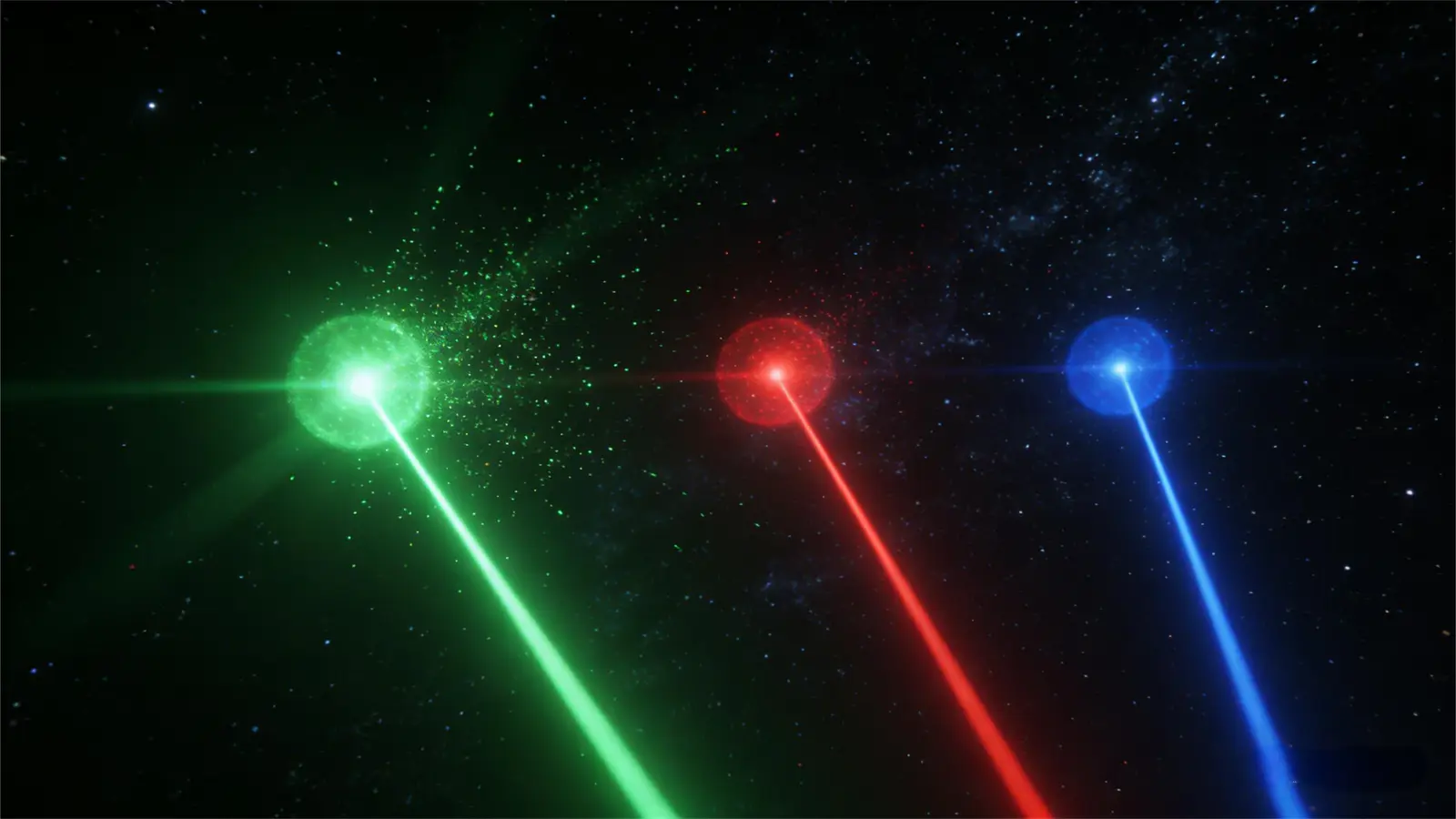
Research on human vision shows that the eye’s peak sensitivity occurs around 555 nm, which lies in the green portion of the spectrum. Because green lasers operate close to this wavelength, they appear significantly brighter than red or blue lasers with the same output power.
This is why a green laser for stargazing is commonly recommended for astronomy demonstrations.
Beam Divergence
Beam divergence describes how quickly a laser beam spreads as it travels through space.
Handheld lasers typically have divergence values between 1 and 5 milliradians (mrad), which determines how tightly the beam remains focused over long distances.
If you want a deeper explanation of beam distance, read: How Far Can a Laser Pointer Go?
Build Quality
Although laser pointers are simple devices, build quality still plays an important role in their usability.
High-quality devices usually include durable housings, stable optical alignment, and reliable activation switches. These features help ensure the laser beam remains steady when pointing at specific stars or constellations.
Green vs Red vs Blue Laser for Astronomy
Laser pointers are available in multiple colors, but their visibility in the night sky varies significantly.
Educational resources such as The Physics Classroom explain that human visual sensitivity peaks near green wavelengths, which is why green laser beams appear brighter to observers.
How Far Can an Astronomy Laser Pointer Reach
Many beginners wonder how far a laser pointer can reach in the sky.
In theory, laser beams can travel extremely long distances. However, the more relevant question is how far the beam remains visible.
Under dark sky conditions, laser beams may appear visible for several miles depending on atmospheric conditions and beam divergence.
Organizations such as International Dark-Sky Association also promote responsible night sky observation and public astronomy education.
Atmospheric Scattering
The visible beam effect occurs because particles in the atmosphere scatter a small portion of the laser light.
- Dust
- Water vapor
- Aerosols
Without this scattering effect, the beam would be invisible from the side.
Beam Divergence
Lower divergence allows the beam to maintain higher intensity over distance, which improves visibility in the sky.
Best Laser Pointer Features for Stargazing
When selecting the best laser pointer for astronomy, several features can improve the stargazing experience.
- High beam visibility
- Stable beam alignment
- Comfortable grip
- Durable construction
Safety Tips When Using Laser Pointers for Astronomy
Laser pointers must always be used responsibly. Safety organizations such as the Laser Institute of America provide guidelines for safe laser operation.
Never Aim at Aircraft
Pointing lasers at aircraft is dangerous and illegal in many countries. Always check the sky before activating a laser pointer.
Avoid Direct Eye Exposure
Laser beams should never be directed toward people or animals, as direct exposure can damage the eyes.
Use Lasers Responsibly
Astronomy laser pointers should only be used for educational demonstrations and identifying stars or constellations.
Frequently Asked Questions
What color laser is best for astronomy?
Green lasers are generally considered the best choice for astronomy because they appear brighter to the human eye.
Are green lasers safe for stargazing?
When used responsibly and according to safety guidelines, green lasers can be used safely for astronomy demonstrations.
How far can a laser pointer reach in the night sky?
Laser beams may appear visible for several miles under dark sky conditions depending on atmospheric scattering.
Do astronomers really use laser pointers?
Yes. Astronomy educators sometimes use laser pointers during public observation events to help audiences identify stars and constellations.
Conclusion
Laser pointers have become valuable tools in modern astronomy education. By projecting a visible beam into the sky, they allow observers to easily identify stars, planets, and constellation patterns.
Because the human eye is particularly sensitive to green wavelengths, green laser pointers are often preferred for stargazing.
However, responsible usage is essential. Following laser safety guidelines ensures that laser pointers remain safe and effective tools for astronomy learning.