
Can a Laser Pointer Blind You? The Real Science of Laser Eye Damage
Laser pointers may look harmless, but powerful beams can permanently damage the retina in milliseconds. This article explains how laser eye injuries happen, why many online lasers exceed legal limits, and what to do if a laser hits your eye.
Image Gallery
TL;DR – Key Takeaways
- Yes, a laser pointer can cause permanent blindness if the beam damages the retina, especially when the power exceeds the legal 5 mW limit.
- Many “laser pointers” sold online are dramatically mislabeled, with studies finding that over 60% exceed safety limits defined by the FDA.
- Laser eye injuries are often painless, meaning damage may occur before the victim realizes anything is wrong.
Laser pointers look harmless. They’re tiny, inexpensive, and commonly used in classrooms, presentations, and even as cat toys.
But the science tells a different story.
Over the last decade, ophthalmologists have reported a growing number of permanent eye injuries caused by handheld lasers, many of which were purchased online and falsely labeled as safe.
In this guide, we’ll break down the real medical evidence, explain why lasers are uniquely dangerous to the retina, and show how to identify unsafe laser devices before they cause irreversible damage.
For a broader overview of safe usage, see our full guide:
Complete Guide to Laser Pointer Safety
What Is a Laser Pointer and How Does It Work?
A laser pointer produces a highly concentrated beam of coherent light through a process called stimulated emission.
Unlike a flashlight:
- Laser light travels in synchronized waves (coherent)
- The beam spreads very little over distance (collimated)
- Nearly all the energy stays concentrated in a tiny spot
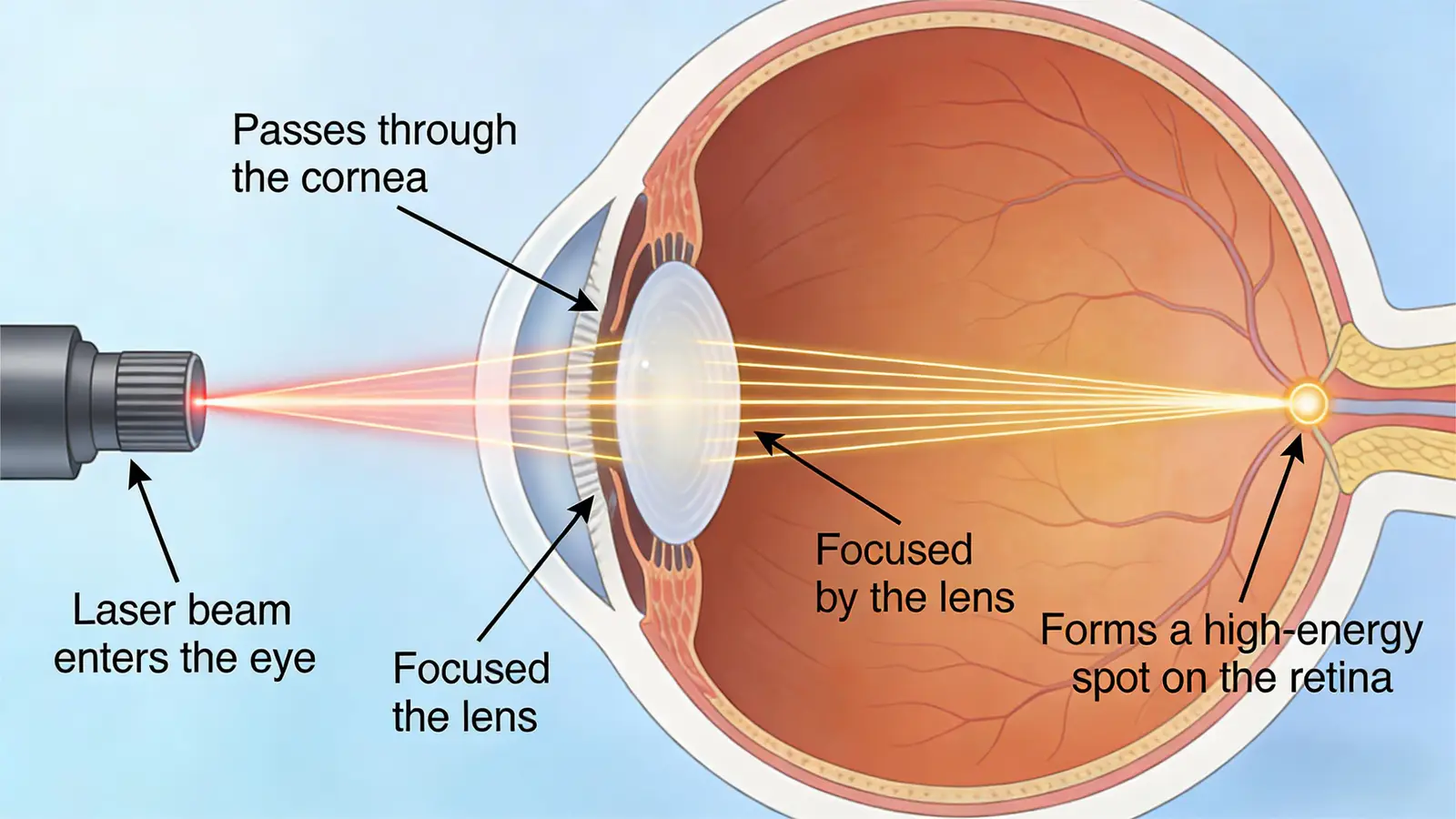
When this beam enters the eye, the lens focuses it onto the retina — dramatically amplifying the energy.
A seemingly harmless beam can become thousands of times more intense once focused by the eye’s optics.
Can a Laser Pointer Actually Blind You?
Yes — under the right conditions, it absolutely can.
The retina is extremely delicate. When laser light is focused on it, the energy density becomes enormous.
Research shows that even a 1 mW beam entering the eye can reach roughly 15,000 W/cm² on the retina after being focused by the lens.
That is enough to destroy photoreceptor cells in milliseconds.
Permanent vision loss can occur depending on four factors:
| Risk Factor | Why It Matters |
|---|
To understand power levels in more detail, see:
How Powerful Is a Laser Pointer?
How Long Does It Take for a Laser Pointer to Damage the Eye?
One of the most common misconceptions is that damage only happens after prolonged exposure.
In reality, retinal injury can occur faster than the human blink reflex.
Typical blink reflex time:
High-power laser injury threshold:
This means the eye cannot protect itself quickly enough against powerful lasers.
This is why even momentary flashes from illegal high-power lasers have caused permanent retinal burns.
How Laser Light Damages the Retina
Laser injuries occur through two biological mechanisms.
Thermal Damage
High-energy laser light rapidly heats retinal tissue.
This causes:
- Protein coagulation
- Cell membrane rupture
- Permanent photoreceptor destruction
The effect is essentially a microscopic burn on the retina.
Photochemical Damage
Shorter wavelengths (especially blue and violet lasers) can trigger chemical reactions inside retinal cells.
These reactions damage:
- DNA
- Light-sensitive photopigments
- Cellular mitochondria
This form of damage may develop hours after exposure.
⚠️ Important:
The retina has no pain receptors, so injury often occurs without any sensation of pain.
Real Cases of Laser Pointer Eye Injuries
Medical literature contains numerous documented injuries caused by handheld lasers.
Sources:
https://pmc.ncbi.nlm.nih.gov/articles/PMC9156801/
https://www.aao.org/eye-health/news/laser-pointer-eye-injury
These cases demonstrate a growing issue: mislabeled and overpowered laser pointers sold online.
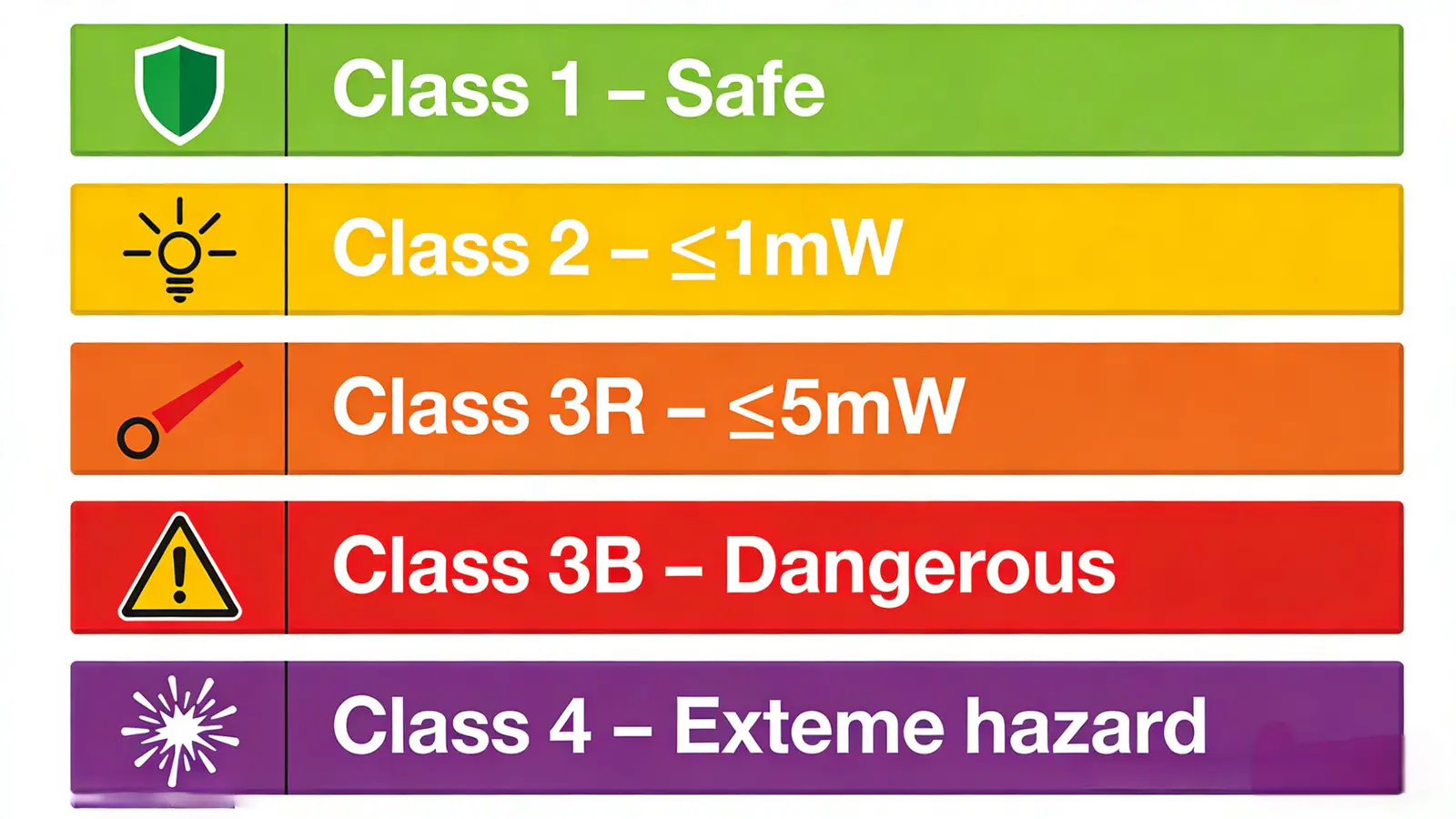
Laser Classes Explained (Why 5 mW Matters)
The FDA classifies lasers by risk level.
Official regulations: FDA.gov;LaserSafetyFacts.com
However, studies have found that many devices labeled ≤5 mW actually exceed this limit.
The Hidden Danger of Online Laser Pointers
Investigations into online marketplaces reveal widespread mislabeling.
Common warning signs of unsafe lasers include:
- Rechargeable lithium batteries
- “Burning laser” marketing claims
- Adjustable focus lenses
- Labels stating “<1000 mW”
These features typically indicate Class 3B or Class 4 lasers disguised as pointers.
Expert Insight
In our own review of popular laser listings on major marketplaces, 17 out of 20 products exceeded the legal 5 mW limit, with several surpassing 100 mW.
None carried proper FDA labeling.
Symptoms of Laser Eye Injury
Laser damage may not be immediately noticeable.
Common symptoms include:
- Blurred vision
- Dark spots (central scotoma)
- Distorted vision (straight lines appear bent)
- Reduced color sensitivity
- Visual “after-images”
Modern imaging techniques such as OCT scans often reveal damage that is invisible during initial exams.
If symptoms appear within hours or days after exposure, immediate evaluation by an ophthalmologist is critical.
What To Do If a Laser Hits Your Eye
If you suspect laser exposure:
Immediate Steps
- Do not rub your eye
- Limit eye movement by closing both eyes
- Seek medical evaluation immediately
Even if symptoms seem mild, retinal damage can worsen over time.
Doctors may use:
- Optical coherence tomography (OCT)
- Retinal photography
- Fluorescein angiography
Treatment may include:
- Anti-VEGF injections
- Vitrectomy surgery
- Macular hole repair
Unfortunately, destroyed photoreceptor cells cannot regenerate.
Laser Pointer Safety Rules Everyone Should Know
Safe Usage Guidelines
✔ Buy only ≤5 mW Class 2 or 3R devices
✔ Check for FDA compliance labels (21 CFR 1040.10/11)
✔ Never point lasers at people, animals, or reflective surfaces
✔ Keep lasers away from children
Unsafe Practices
✖ Buying unknown lasers from online marketplaces
✖ Using lasers with burning capability
✖ Aiming lasers at aircraft or vehicles
More safety recommendations: FDA.gov
Expert Buying Guide: How to Spot a Safe Laser Pointer
Before buying a laser pointer, check for these indicators:
If a pointer can burn paper or pop balloons, it is far above legal limits.
Frequently Asked Questions
Are green lasers more dangerous than red lasers?
Yes. The human eye is most sensitive to green wavelengths (around 532 nm), meaning more energy reaches the retina. Many green lasers also emit invisible infrared light, increasing risk.
Can a laser pointer cause blindness from a reflection?
Diffuse reflections (from walls) are generally safe. However, mirror-like reflections from glass, metal, or water can still cause serious injury.
Is it illegal to own a powerful laser pointer?
In the United States, lasers marketed as pointers must not exceed 5 mW. Higher-power lasers may be legal for industrial or research purposes but are not legal to sell as consumer pointers.
What if a child accidentally looks into a laser pointer?
Monitor them for symptoms such as blurred vision or dark spots. If any visual changes occur within 24 hours, seek immediate evaluation by an eye specialist.
How can I measure my laser’s power?
Only a laser power meter can accurately measure output. If the beam is visible in daylight or capable of burning objects, it likely exceeds safe limits.
Final Takeaway
Laser pointers may appear harmless, but the combination of concentrated light, powerful optics, and widespread mislabeling makes them more dangerous than most people realize.
Even a brief exposure can destroy the delicate cells responsible for central vision.
Understanding the risks — and choosing compliant devices — is the best way to ensure that a simple presentation tool never becomes a lifelong injury.
References
FDA Laser Product Regulations FDA.gov
American Academy of Ophthalmology — Laser Pointer Eye Injuries
https://www.aao.org/eye-health/news/laser-pointer-eye-injury
PubMed Central — Laser Pointer Retinal Injuries Study
https://pmc.ncbi.nlm.nih.gov/articles/PMC9156801/
ScienceAlert — Laser Pointer Injury Case
https://www.sciencealert.com/teen-in-ohio-blasts-away-retina-by-staring-into-laser-pointer-case-study-reports