
How Powerful is a Laser Pointer? Understanding Power Levels, Safety, and Applications
Laser pointers are commonly used for presentations, astronomy, and various professional applications, but how powerful are they really? This article explores the power levels of laser pointers, their safety classifications, and how different wavelengths affect their visibility. Learn how laser pointers are regulated, the risks of higher-powered lasers, and the differences between red, green, and blue lasers.
Image Gallery
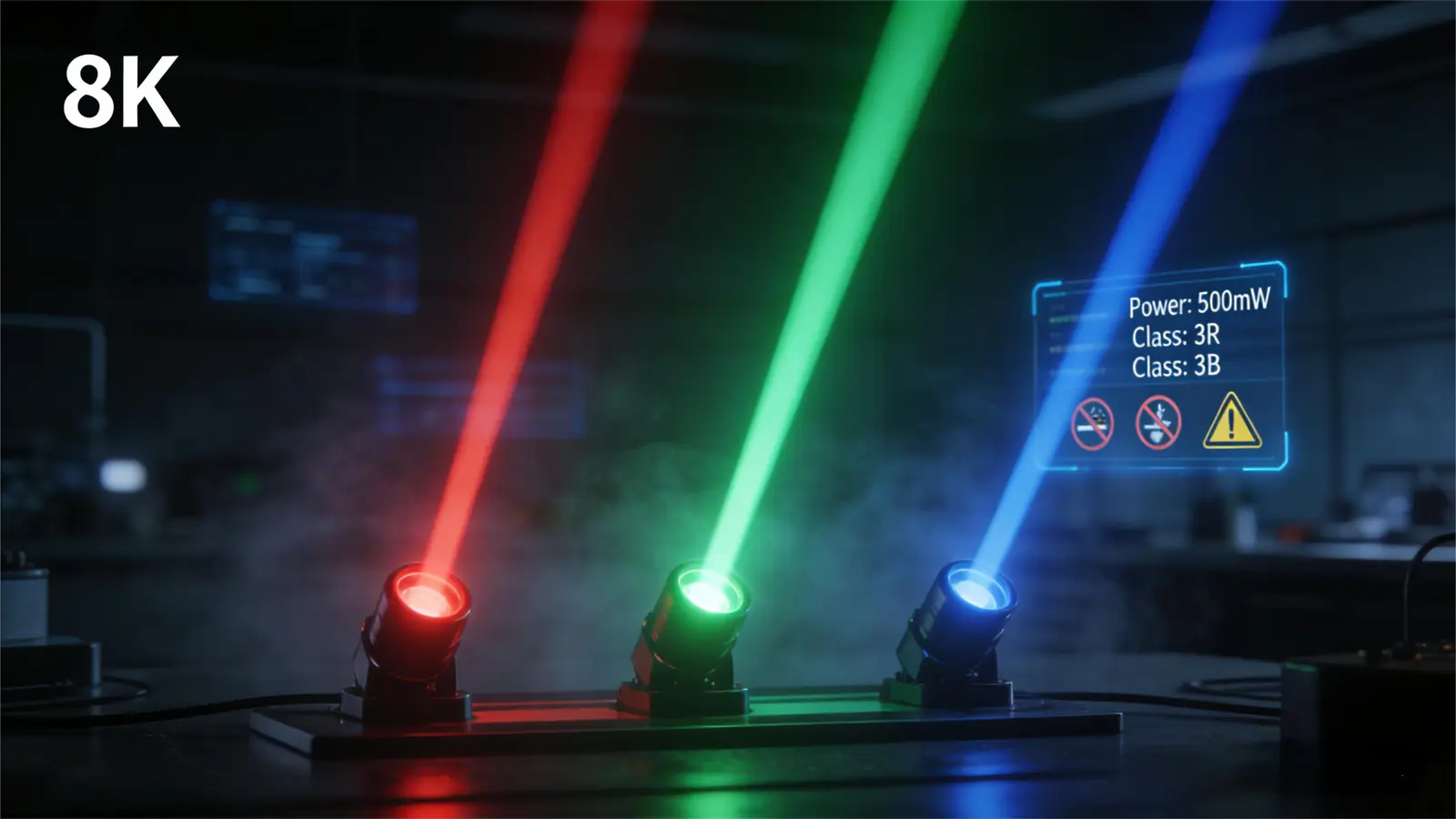
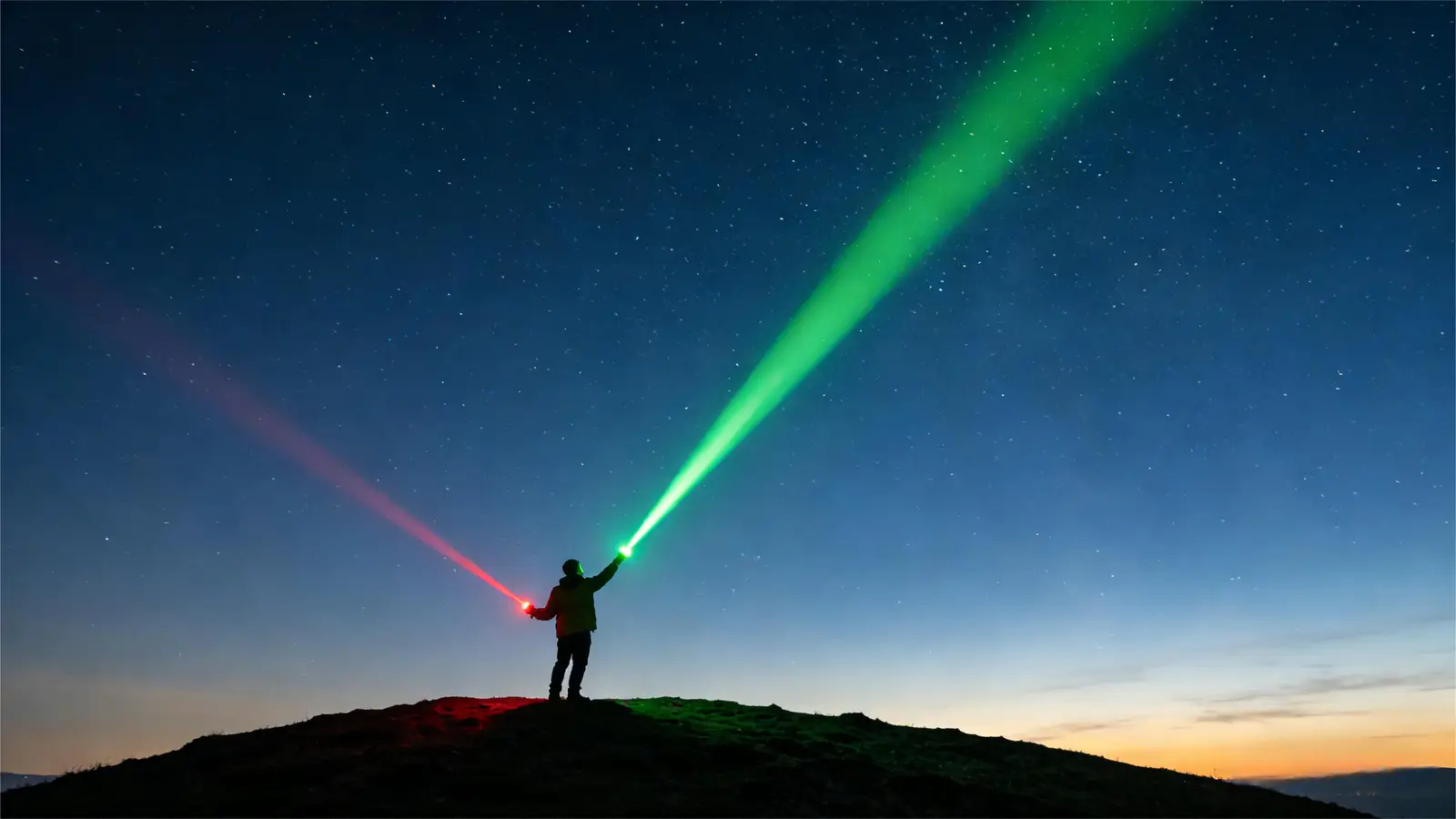
When it comes to laser pointers, one question often comes up: how powerful is a laser pointer? The answer varies by type, color, and legal restrictions. In this comprehensive guide, we explore power levels from 1 mW to over 500 mW, safety classifications, international regulations, and documented eye injury cases. All data are linked to original sources like FDA, NEJM, and official safety standards.
Understanding Laser Pointer Power Levels
Laser pointers are used in presentations, astronomy, education, and even industry. Their power is measured in milliwatts (mW). Most consumer models fall between 1 and 5 mW, but illegally high-powered devices (sometimes >500 mW) are sold online disguised as ordinary pointers.
Typical Power Levels of Consumer Laser Pointers
According to the U.S. Food and Drug Administration (FDA), laser pointers intended for demonstration purposes are classified as Class IIIa (IEC Class 3R) and limited to 5 mW for visible light (400–710 nm). Devices above 5 mW are not allowed to be marketed as laser pointers. However, mislabeled products with actual outputs of 150 mW – 700 mW are common online and extremely dangerous.
🔗 Source: FDA — Important Information for Laser Pointer Manufacturers | Lawrence Berkeley Lab EHS
Comparing Power Output: Red, Green, and Blue Laser Pointers
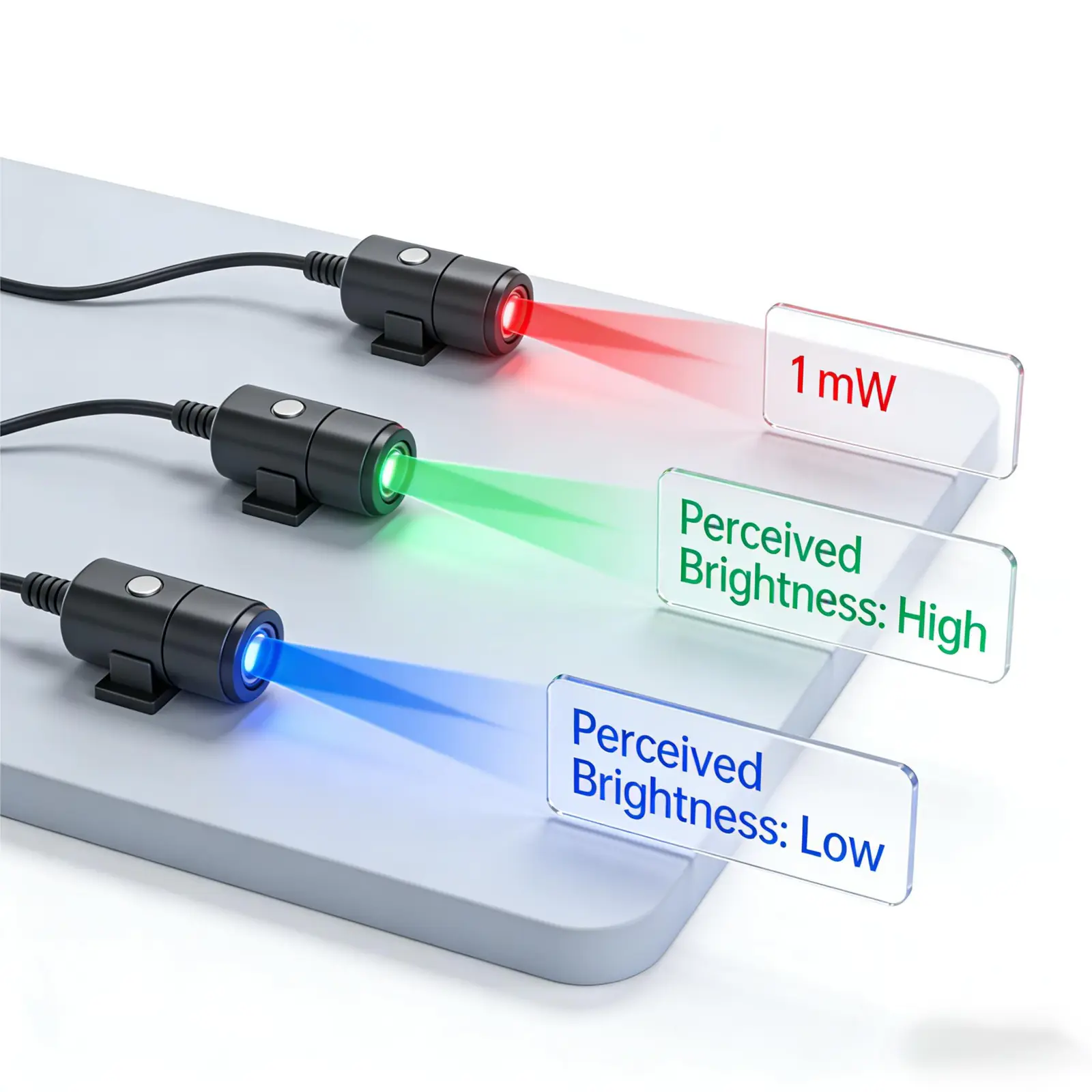
The color of a laser dramatically affects its perceived brightness, even at identical power. Human eyes are most sensitive to green (555 nm).
Green laser pointers use DPSS (diode-pumped solid-state) technology: an infrared laser (808 nm) is converted to 1064 nm and then frequency-doubled to 532 nm. This means a green laser contains internal infrared beams that can be hazardous if the crystal fails. Even if the output is <5 mW, internal power may be >100 mW. 🔗 LaserSafetyFacts.com — Hazard Distance Chart
Beam Visibility & Hazard Distance
The distance at which a laser can cause glare or injury (NOHD) scales with the square root of power. For example, increasing power from 5 mW to 500 mW (100×) only increases hazard distance by about 10×. Color does not change the physical injury distance, but it affects visual interference distance:
- 1 mW red (635 nm): glare possible up to ~255 feet (78 m).
- 1 mW green (532 nm): glare possible up to ~490 feet (149 m) — nearly double the distance.
- Blue (445 nm): much shorter glare distance due to low eye sensitivity.
🔗 Detailed data: LaserSafetyFacts Hazard Distance Chart
Global Regulations: How Powerful Can a Laser Pointer Be?
Laser power limits vary significantly by country. Below is a summary of current legal limits for consumer laser pointers:
🔗 Sources: LaserPointerSafety.com — International Laws | German BfS (EU new standard 2024)
Real-World Laser Injury Cases
📄 NEJM Case (2010): 15‑year‑old boy, 150 mW green laser
A teenager bought a "laser pointer" online that actually emitted 150 mW (30× the US limit). While playing in front of a mirror, the beam repeatedly entered his eyes. He suffered permanent damage: left eye retinal hemorrhage and right eye macular scars. Despite treatment, his vision remained impaired. 🔗 New England Journal of Medicine — full report
📄 Seven Teenagers Injured by One Laser (2022)
A single high-power handheld laser caused retinal injuries in seven boys, illustrating how easily these devices can cause mass harm. 🔗 ScienceDirect — case series 2022
✈️ Aviation Incidents
Pointing lasers at aircraft is a federal crime in the US, punishable by up to 5 years in prison. In 2023, the FAA reported over 9,000 laser strikes. The flash blindness can disable pilots during landing. 🔗 FDA — Illuminating Facts
Safety Considerations: How Powerful is Too Powerful?
The natural blink reflex (about 0.25 seconds) protects the eye only for exposures <5 mW. Above that, even a momentary look can cause permanent retinal burns. Potential injuries include:
- Retinal burns, macular holes, hemorrhages
- Foveal scarring — loss of central vision
- Flash blindness in drivers/pilots
Children and teenagers are at highest risk because they often misuse lasers and may not understand the danger. A 2018 study in Nature found that children with behavioural or learning issues are especially vulnerable. 🔗 Nature — Retinal burns in children
Safety Tips
- Never aim a laser at people, animals, or reflective surfaces.
- Avoid buying lasers from unverified online sellers; they may be illegally powerful.
- If you need a laser for astronomy, choose a reputable brand that specifies compliance with FDA/CE standards.
- Store lasers out of children’s reach.
Frequently Asked Questions (FAQ)
1. How powerful is a standard laser pointer?
Most legal consumer laser pointers are 1–5 mW. Presentation clickers are often <1 mW (Class 1 or 2).
2. What is the brightest color for a laser pointer?
Green (532 nm) appears 4–7 times brighter than red of the same power, making it ideal for outdoor use or astronomy.
3. Are high‑powered laser pointers ( >5 mW) legal?
In the US and many countries, they are not legal to sell as laser pointers. However, they may be sold for industrial/research use with proper warnings. Always check local laws; in the EU the limit is now 1 mW.
4. Can a 5 mW laser damage eyes?
Direct long exposure could cause glare afterimages, but the blink reflex usually prevents permanent injury. However, staring into any laser is not recommended.
5. What’s the difference between Class 3R and Class 3B?
Class 3R (≤5 mW) is relatively safe due to the blink reflex. Class 3B (5–500 mW) can cause eye damage even from brief exposure and requires safety goggles.
Conclusion
Laser pointers are useful tools, but their power must be respected. Whether you need a pointer for a presentation, stargazing, or education, always choose a device that complies with local regulations (≤5 mW in the US, ≤1 mW in the EU). Remember that higher power does not mean better visibility — green lasers provide excellent brightness at safe levels. Stay informed and stay safe.
For more details on safe laser use, visit our Safety Tips article. Interested in astronomy? Check our Astronomy Laser Guide. And if you’re new to laser technology, our Laser Technology Guide explains how they work.
References: All hyperlinks lead to primary sources: FDA, NEJM, Nature, LaserSafetyFacts, LaserPointerSafety.com, ANSI, and government agencies. This article is regularly updated to reflect the latest safety standards (EU 2024, Swiss Class‑1 only).