
Laser Pointer Bird Deterrent for Fishing: Does It Actually Work?
Birds stealing bait or fish while fishing is more common than most anglers expect. This in-depth guide explores whether green laser pointers actually work for bird deterrence, backed by real user experiences, scientific research, and practical usage tips.
Image Gallery

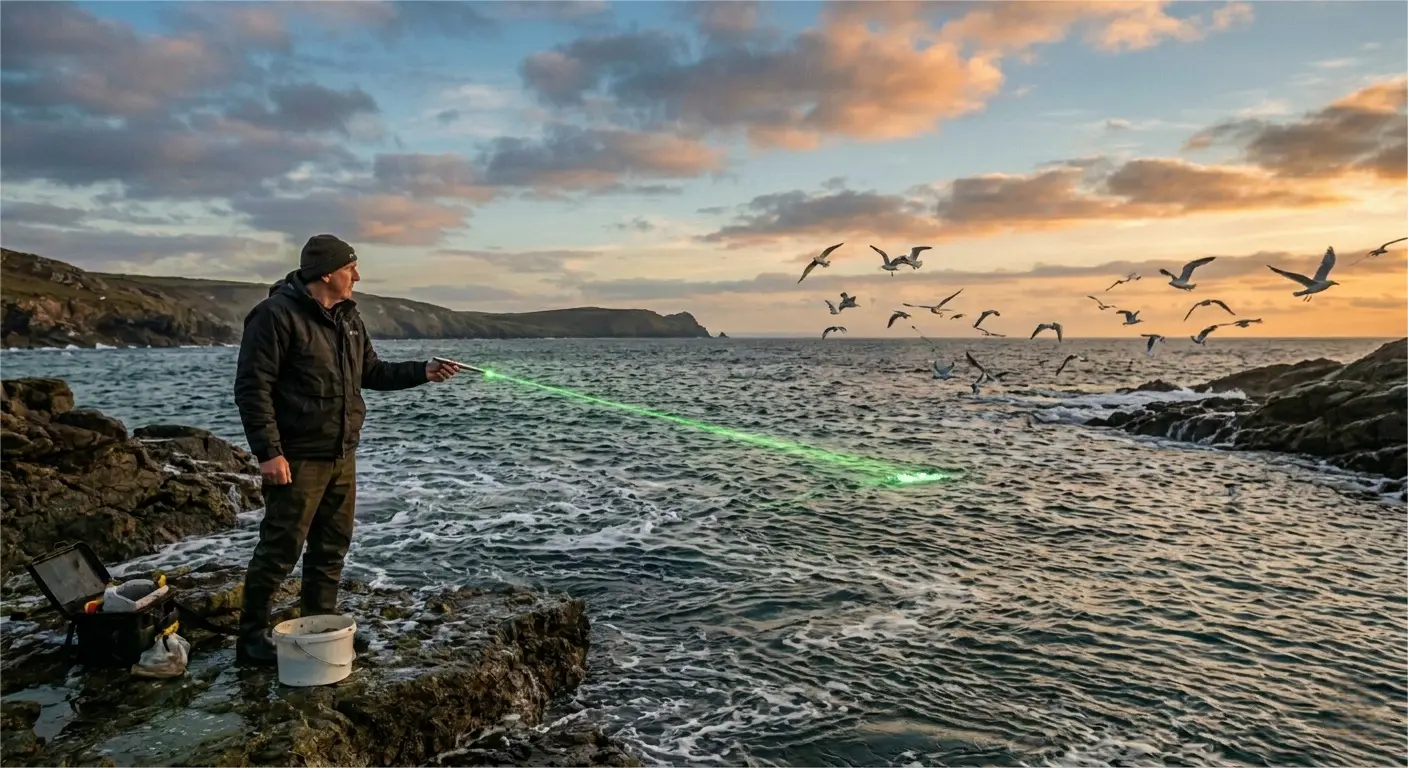
Nothing ruins a perfect fishing spot like a flock of seagulls dive‑bombing your bait, a pelican trying to steal your catch, or a cormorant cleaning your hooks before you even get a bite. If you’ve ever spent more time untangling birds from your line than actually fishing, you know the frustration.
The good news? A green laser pointer has become a surprisingly effective, humane, and quiet tool to keep birds away from your fishing spot – without harming them or scaring the fish. In this guide, we’ll cover exactly how it works, what the science says, real‑world angler experiences, and how to use a laser safely and legally.
1. Why Birds Are a Real Problem for Anglers (Real Stories)
Birds don’t just “annoy” you – they can cost you fish, bait, and time. From online fishing communities, here are typical complaints:
“Only real solution is picking up and moving when it's pelicans. They scare the fish off anyways so you might as well.” – r/saltwaterfishing Source
“The worst is fishing the flats with live greenbacks and the cormorants diving down to clean your hooks.” – same thread
“I once was reeling in a small striped bass, then a pelican swooped down and scooped him while still on the line.” – r/Fishing Source
“Had a seagull fly into my line mid cast, that was a pain to get untangled.” – r/Fishing Source
From pelicans, seagulls, cormorants, ospreys, to ducks – all can turn a productive spot into a bird circus. The result: lost fish, stolen bait, tangled lines, and sometimes even accidental hooking of protected species (which brings legal headaches).
2. How a Laser Pointer Works to Deter Birds – The Science
Birds have exceptional color vision, much better than humans. A moving laser beam – especially green – triggers their innate “predator avoidance” instinct. They perceive the fast‑moving dot as a threat and flee.
Key scientific findings:
3. Real Angler Experiences: Does It Actually Work?
Online forums are full of mixed but largely positive feedback – which matches the science.
Positive experiences:
“Green laser light really unnerves them, drives them away and they are reluctant to return.” – targeting geese Source
“If you live in a place plagued by Canada geese, get a handheld green laser. They are TERRIFIED of these things and will flee immediately.” Source
“Green lasers are great for upsetting birds, we do it with the seagulls at work and just a quick swipe across the roof is enough to get them all up and flying.” Source
But also honest limitations:
“The geese were terrified for about a week… Then they completely ignored the lasers.” – classic habituation Source
“Other waterbirds don't seem to mind. Ducks in particular are immune. It seems to be goose specific.” Source
“A laser pointer is 50/50 as sometimes they flee the second they see the dot and other times it doesn't bother them at all.” Source
Bottom line: Green lasers work well on many problematic birds (geese, seagulls, cormorants, herons), but they are not a magic bullet. They are best used as one tool in your arsenal – combine with moving spots, occasional loud noises, or even a trained dog if possible.
4. How to Use a Laser Pointer for Bird Deterrence While Fishing – Step by Step
Follow these guidelines to be effective, safe, and legal.
4.1 Choose the Right Laser
- Color: Green (532nm) – much more visible in low‑light and daytime conditions than red.
- Quality: Look for a laser with a focusable beam (adjustable spot size) and IPX4 or higher water resistance for marine environments.
Based on customer feedback, our B023 green laser (219 USD) has proven very effective for bird deterrence – anglers report that a quick sweep across the water surface makes seagulls and geese take off immediately.
4.2 Technique – The Right Way
- Never aim at the birds directly – especially not at their eyes. Sweep the beam across the water surface in front of them or along the bank, moving it like a predator approaching.
- Start from a distance – don’t wait until birds are on top of your spot.
- Use erratic, unpredictable movements – straight lines are less alarming than zig‑zags.
- Combine with your presence – stand up, wave, or call out; the laser reinforces that the area is unsafe.
4.3 Safety & Legal Rules – Absolute Must‑Knows
“Pointing a laser at an aircraft is a federal crime.” – FAA, fines up to $32,646 per violation Source
- Never point a laser at any aircraft, vehicle, or person.
- Do not aim at birds’ eyes – use only the area around them.
- Avoid reflective surfaces – water can reflect the beam, so be aware of your surroundings and other boaters.
- In sensitive areas (national parks, wildlife refuges) , check local regulations – many prohibit using lights or lasers on wildlife. Source
For a full rundown on laser classes and eye safety, see our Complete Guide to Laser Pointer Safety.
5. Recommended Products – What Anglers Are Using
Based on customer feedback, the B023 green laser (219 USD) has been reported to work exceptionally well for bird deterrence. Its bright, focusable green beam is visible even in low‑light conditions (dawn/dusk) and can reach across a wide fishing spot.
- Power: Moderate – effective for bird dispersal without being dangerously overpowered.
- Build: Durable, weather‑resistant housing – important for fishing environments.
- Battery: Long enough for a full day on the water.
For those who want a more budget‑friendly option, the B020 green laser (278 USD) also offers excellent performance.
👉 Check B023 Green Laser
👉 Check B020 Green Laser
6. Frequently Asked Questions
Q: Will a green laser scare away fish?
Not really. Fish may react to sudden bright light, but a quick sweep over the water surface (not pointing down into the water) is unlikely to spook fish. However, shining a laser directly into the water can cause brief disorientation – so avoid doing that.
Q: Is it legal to use a laser to scare birds while fishing?
In most US states, yes – as long as you follow FAA/FDA rules (no aircraft, no direct eye exposure). However, some wildlife refuges and state parks prohibit using lasers on animals. Always check local regulations.
Q: How long does it take for birds to get used to the laser?
Habituation can happen, especially with ducks and some gull species. To prevent it:
- Use the laser intermittently (not every day).
- Combine with other deterrents (shouting, moving your boat, etc.).
- Change the beam pattern – random movements work better than repetitive sweeps.
Q: What power laser is best for daytime fishing?
For daytime or bright conditions, a 100mW green laser is more visible than a 5mW. But never exceed 100mW for handheld use around people or boats. Always wear laser safety glasses if using >50mW.
For more details on laser power and visibility, check our guide: How Far Can a Laser Pointer Go?
7. Final Thoughts – A Tool, Not a Miracle
A green laser pointer won’t solve every bird problem, but for many anglers it’s a game‑changer. It’s quiet, humane, and gives you distance control – you can scare birds away without leaving your fishing spot.
Key takeaways:
- Works best on geese, seagulls, cormorants, herons – less on ducks.
- Green > red for dawn/dusk and overcast days.
- Safe use is critical – never aim at aircraft, people, or bird eyes.
- Rotate with other methods to avoid habituation.
If you’re tired of birds stealing your bait and fish, give a quality green laser a try. Just remember to use it responsibly.
Disclaimer: Laws and regulations vary by location. Always verify with local authorities before using a laser to deter wildlife.