
Laser Pointer Power Guide: What Does mW Mean and How Much Do You Need?
Understand what mW means in laser pointers, how power affects brightness and safety, and how to choose the right laser for your needs.
Image Gallery
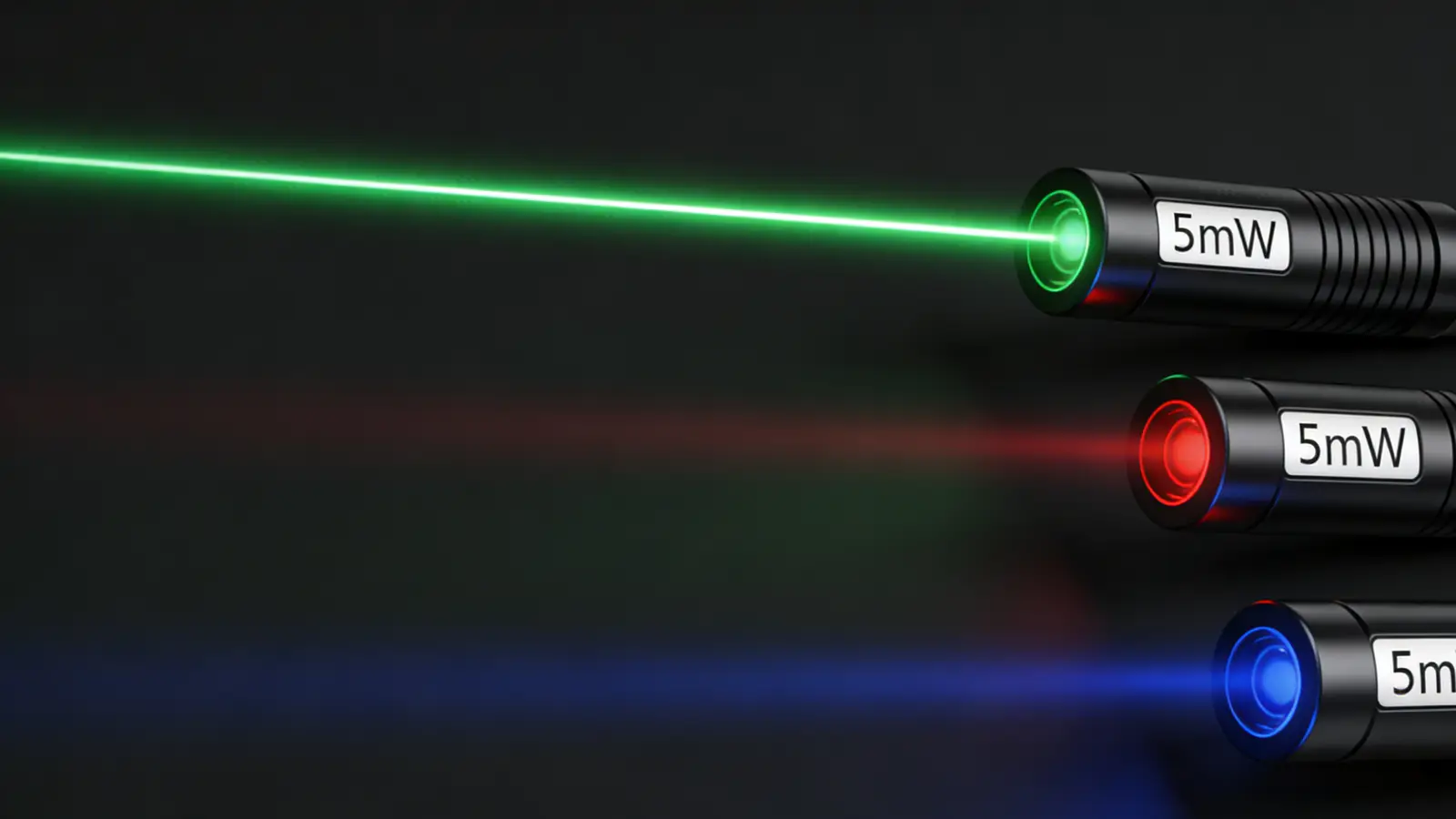
When you see a laser pointer labeled “5mW,” “50mW,” or even “1000mW,” it’s easy to assume that higher numbers automatically mean better performance.
But here’s the truth:
Laser power (mW) is not just about brightness — it determines visibility, usability, and most importantly, safety.
Choosing the right power level isn’t about picking the highest number. It’s about choosing the right tool for the right job.
What Does mW Mean on a Laser Pointer?
The term mW (milliwatt) is a unit of power that measures how much energy a laser emits.
- 1 watt = 1000 milliwatts
- A 5mW laser emits 0.005 watts of energy
That may sound small, but lasers are fundamentally different from normal light sources.
Unlike a light bulb that spreads light in all directions, a laser focuses energy into a tight, coherent beam. This concentration makes even low-power lasers highly visible—and potentially hazardous under certain conditions.
Laser Power vs Brightness: Why Color Matters More Than You Think
One of the biggest misconceptions is:
“Higher mW = brighter laser”
This is not always true.
Human eyes are most sensitive to green light (around 555nm). According to optical research and visibility studies, green lasers can appear up to 20–30 times brighter than red lasers at the same power level.
You can explore this further in our guide on
👉 Best Laser Pointer for Astronomy
Practical comparison:
Is Higher mW Always Better?
No — and in many cases, it’s the wrong choice.
For everyday use:
- A 100mW laser is not better than a 5mW laser
- It’s simply more powerful than necessary
According to the U.S. Food & Drug Administration (FDA), laser pointers marketed to consumers are generally limited to 5mW for safety reasons:
Important Information for Laser Pointer Manufacturers
Higher power increases:
- Eye hazard risk
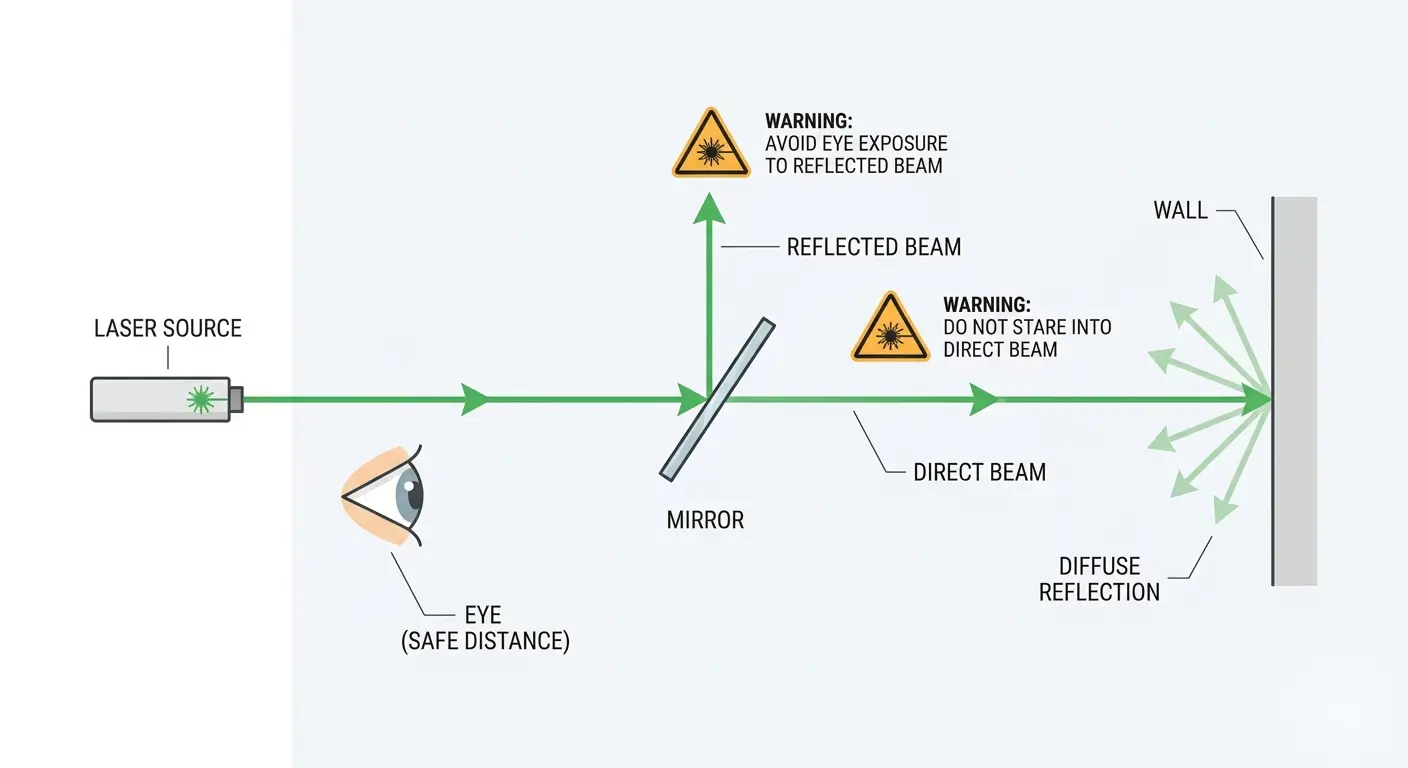
- Reflection danger
- Legal and usage restrictions
But that doesn’t mean high-power lasers are useless — far from it.
Understanding Laser Safety Classes
Laser devices are categorized by risk level. The classification system is widely used in safety standards such as those outlined by organizations like the Laser Institute of America:
https://www.lia.org/resources/laser-safety-information
👉 If you’re unsure how to use lasers safely, read our full
👉 laser pointer safety guide
How Much Laser Power Do You Actually Need?
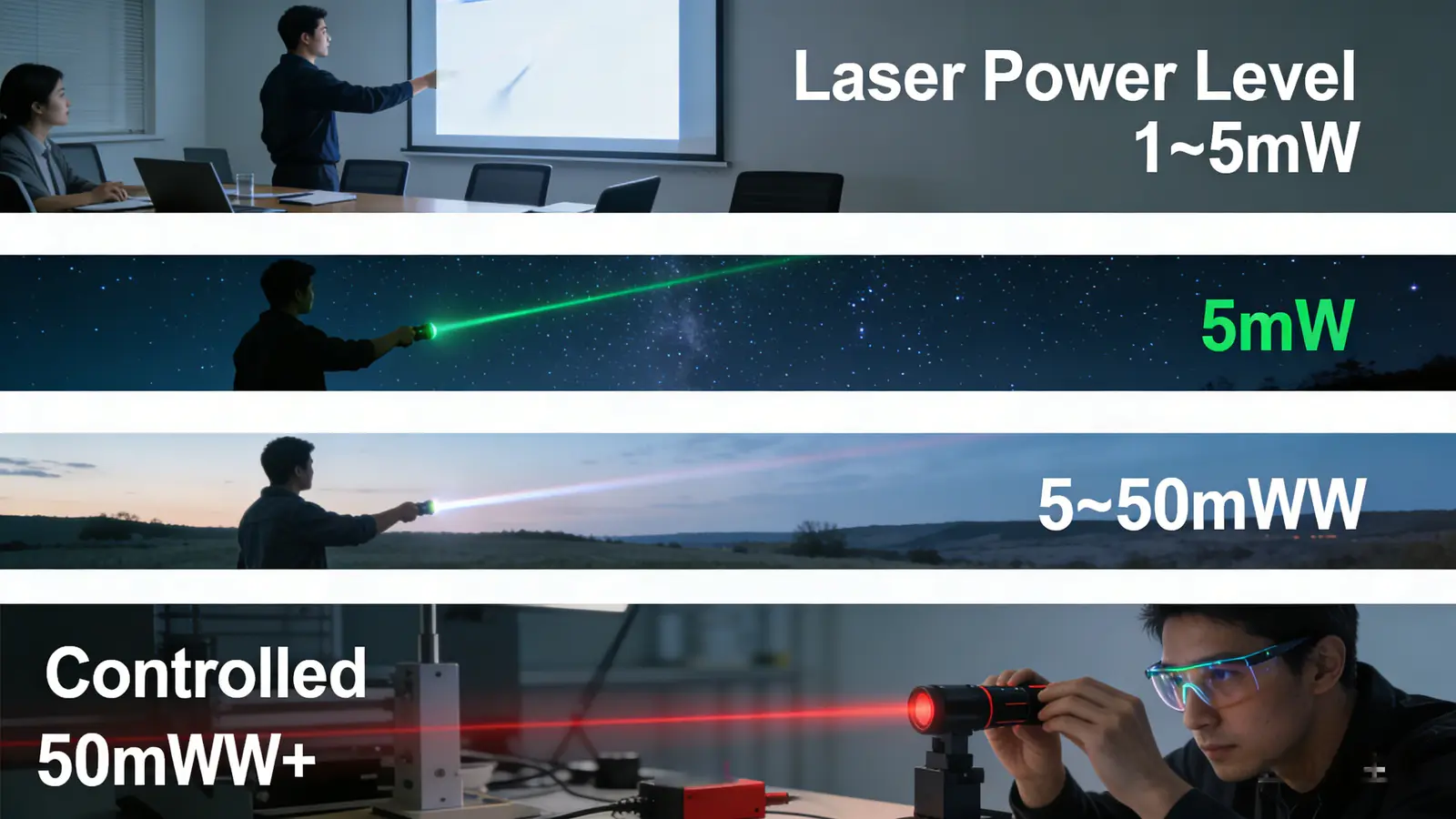
1. Presentations & Indoor Use
Recommended: 1–5mW
- Clear visibility on screens
- Safe for controlled environments
2. Astronomy & Stargazing
Recommended: 5mW (Green)
- Beam visible in dark skies
- Ideal for pointing stars
3. Pet Use (Cats)
Recommended: <1mW
- Avoid direct eye exposure
- Use responsibly
👉 Is a Laser Pointer Bad for Cats?
4. Outdoor / Daylight Visibility
Recommended: 5–50mW
- Improved visibility in bright environments
- Requires more awareness and control
When Do You Actually Need a High-Power Laser?
High-power lasers (Class 3B and Class 4) are not designed for casual pointing—they are specialized tools.
They are used for:
- Long-distance outdoor visibility
- Alignment and positioning
- Scientific demonstrations
- Controlled experiments
👉 The key difference:
These devices require knowledge, control, and proper safety handling.
Choosing a Reliable Laser Matters More Than Raw Power
One major risk in the market is mislabeling and poor manufacturing quality.
According to university safety advisories such as the University of San Francisco EHS program:
https://myusf.usfca.edu/environmental-health-safety/laser-safety
Some low-cost lasers:
- Output far more power than labeled
- Lack proper infrared filters
- May emit invisible IR radiation
👉 This means:
A properly engineered laser is far safer than an unknown “high-power bargain.”
Power Comparison Table (Real-World Use)
Common Myths About Laser Power
Myth 1: Higher mW means longer distance
Reality: All lasers travel extremely far; power affects visibility.
Myth 2: Blue lasers are stronger
Reality: Color does not determine power.
Myth 3: It’s safe if you don’t look directly
Reality: Even reflections can pose risks at higher power levels.
If you're wondering about actual eye risk, see:
👉 can a laser pointer blind you
FAQ
What does mW mean in laser pointers?
It measures the output power of the laser beam.
Is 5mW enough for most uses?
Yes, especially for presentations and astronomy.
Are high-power lasers dangerous?
They require proper handling and safety awareness.
Can a laser pointer damage eyes?
Yes, improper use can cause eye injury.
Conclusion
Choosing the right laser pointer is not about buying the most powerful option — it’s about selecting the right level of power for your needs.
- For most users: 1–5mW is ideal
- For advanced use: higher power offers more capability—but requires responsibility
The best laser is not the strongest — it’s the one that fits your purpose safely and effectively.