
Red vs. Green Laser for Presentations: Why Your “Brighter” Laser Isn’t Visible
Green lasers are brighter—but not always more visible. This guide explains the real physics behind V(λ), DPSS safety risks, LCD polarization issues, and how to choose the right laser pointer for presentations.
Image Gallery
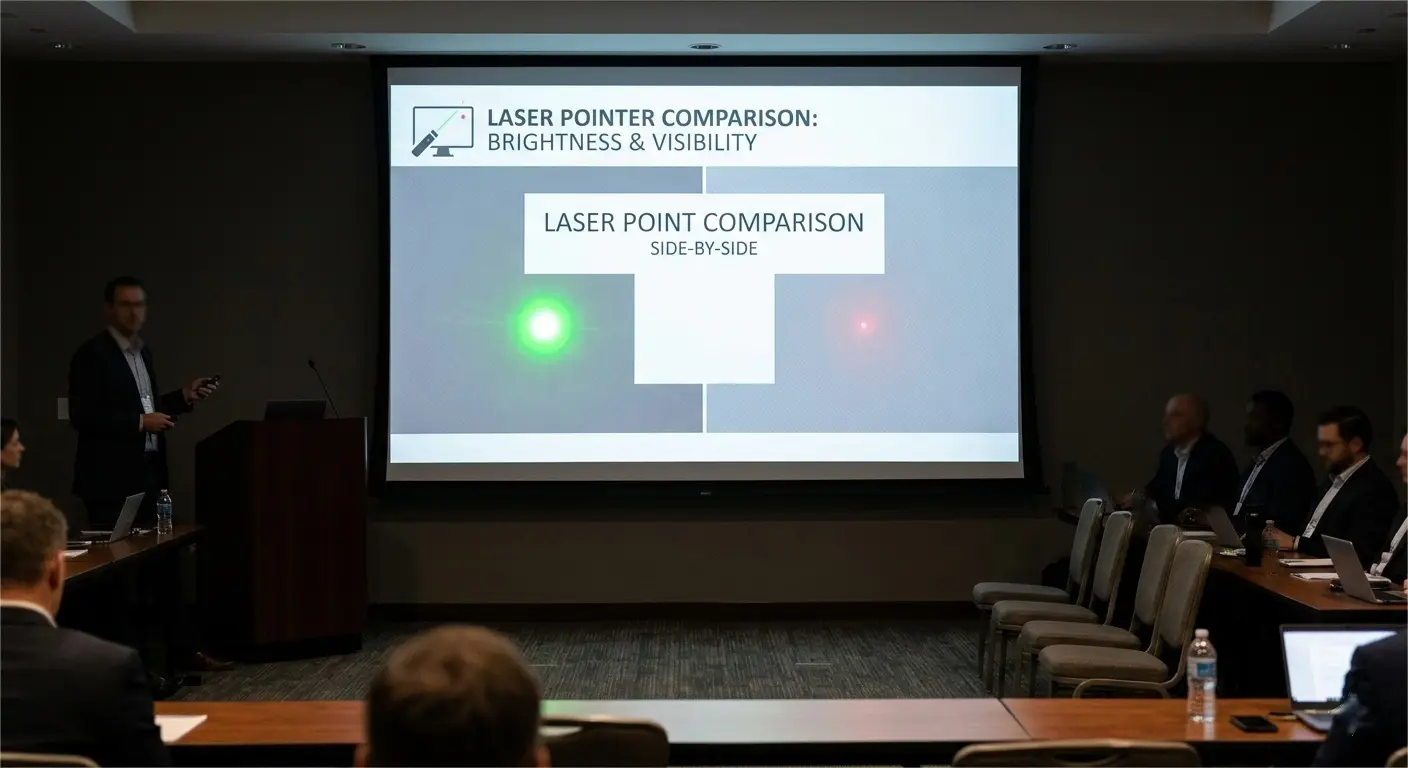
You bought a green laser pointer because everyone said it's brighter.
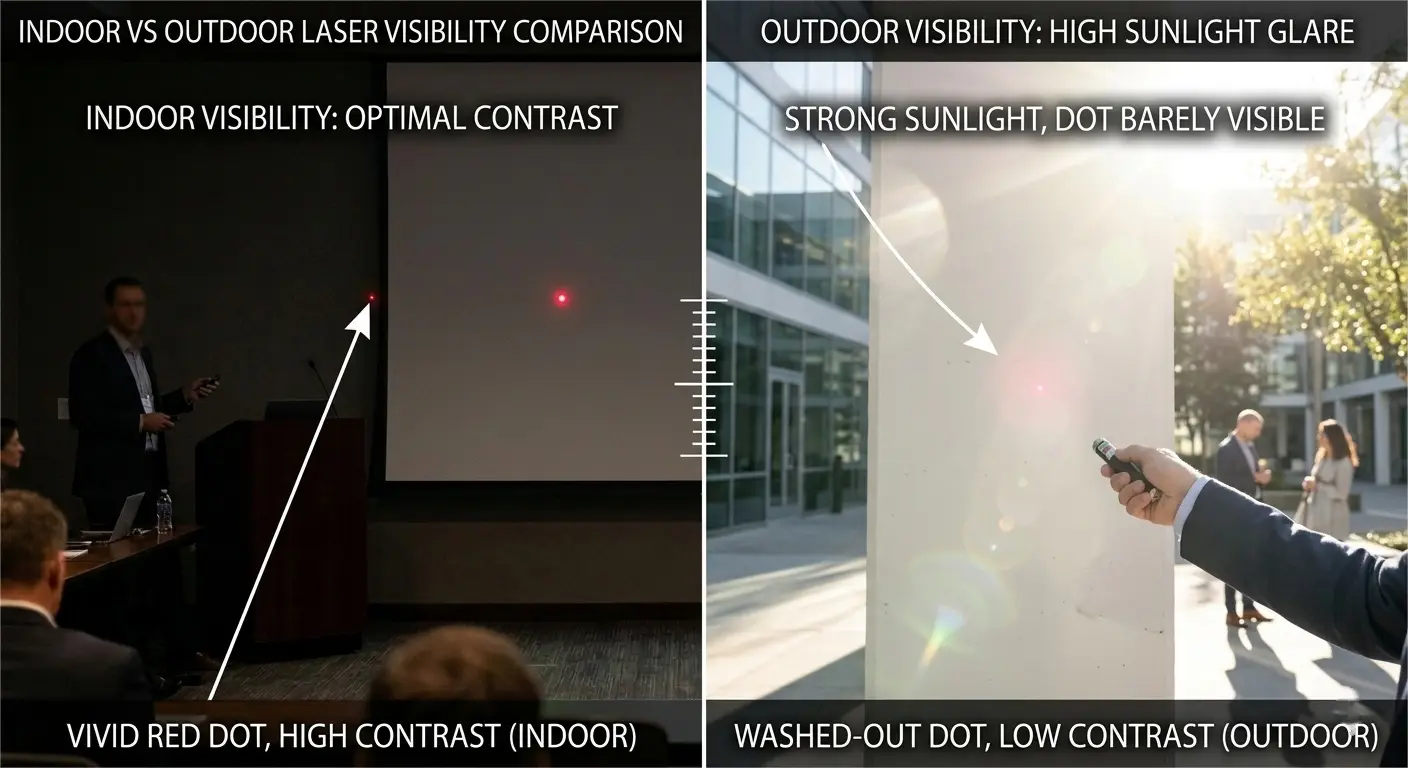
Then you walk into a bright meeting room… and the dot is gone.
Not dim. Not weak.
Just… invisible.
Meanwhile, someone using a red laser is pointing at the screen just fine.
So what’s going on?
Is green actually better—or is something else affecting visibility?
Let’s break it down using real data, not internet myths.
The Short Answer (No Fluff)
- ✅ Green is usually more visible indoors
- ⚠️ But not always (LCD screens can kill it completely)
- ❗ Most cheap green lasers are actually less safe than red
- 🚫 Neither color works in direct sunlight at legal power levels
If you just want a recommendation:
👉 Get a 520nm green (direct diode) laser pointer under 5mW
👉 Avoid cheap 532nm DPSS unless you trust the brand
If you’re also wondering how far a laser actually stays visible, this guide breaks it down with real numbers:
https://laserpointerhub.com/blog/how-far-can-a-laser-pointer-go-distance-visibility-and-the-science-explained
Why Green Looks Brighter (Actual Physics, Not Marketing)
Everyone says “green is 5–6× brighter than red.”
That’s… not really accurate.
Human eye sensitivity is defined by the CIE V(λ) curve:
| Wavelength | V(λ) | Perceived Brightness |
|---|---|---|
| 532nm (green) | 0.862 | Very high |
| 635nm (red) | 0.217 | Medium |
| 650nm (common red) | 0.107 | Low |
| 660nm (deep red) | 0.061 | Very low |
👉 532nm vs 650nm = ~8× brighter, not 5–6×
So yes—green wins.
But real-world visibility isn’t just about raw brightness.
Not All Red Lasers Are Equal (This Matters More Than You Think)
Most people compare:
- “Green laser”
- “Red laser”
But in reality:
- Cheap red = 650–660nm
- Better red = 635nm (much brighter)
👉 Difference = ~3.5×
So sometimes what you’re seeing isn’t color—it’s just different hardware quality.
Why Your Laser Disappears on Screens (LCD Problem)
Here’s something almost no one tells you:
👉 Laser visibility on screens is NOT just about brightness
LCD displays use polarization filters.
If your laser hits the screen at the wrong angle:
👉 The dot can literally disappear
Simple fix:
👉 Rotate the pointer 90°
That’s it. No need to change color or buy a new device.
The Hidden Problem with Green Lasers (DPSS)
This is where things get a bit less obvious—but important.
Most cheap green lasers use DPSS (Diode-Pumped Solid-State):
- 808nm infrared → pump
- 1064nm infrared → amplified
- Converted to 532nm green
The issue:
👉 If conversion fails…
You still get:
- 808nm IR
- 1064nm IR
👉 But no visible green light
Real data (NIST study)
According to NIST:
https://www.nist.gov/news-events/news/2013/03/nist-tests-underscore-potential-hazards-green-laser-pointers
- ❗ 90% failed safety compliance
- ❗ Up to 13× over legal power
- ❗ Many emitted invisible infrared above limits
What this means in real life
If your green laser suddenly “stops working”:
👉 Don’t assume it’s off
👉 It may still be emitting invisible radiation
If you want a deeper breakdown of real-world laser risks (eyes, pets, etc.), this guide explains it in plain language:
https://laserpointerhub.com/blog/can-a-laser-pointer-blind-you-the-real-science-of-laser-eye-damage
Cold Rooms = “Dead” Laser (Not Really Dead)
DPSS lasers depend on temperature.
In cold environments:
- Green output drops or disappears
- Infrared can still be present
So again—what looks “dead” might not actually be off.
Daylight Reality (This Kills Most Advice Online)
Let’s be honest:
👉 5mW lasers are basically useless in direct sunlight
Real-world testing from the community:
https://laserpointerforums.com/threads/laser-best-for-daylight-visibility.96398/
- 5mW → not visible
- 30mW → barely usable
- 1W → clearly visible
The problem:
👉 Legal presentation lasers are limited to 5mW
So:
👉 No legal laser pointer works well outdoors in daylight
The Visibility Paradox (Green Isn’t Always Better)
Green is brighter—but it also creates more glare.
Research from Journal of Vision:
https://jov.arvojournals.org/article.aspx?articleid=2131878
Shows that strong green glare can:
- Require 500× brightness increase to detect content
- Up to 1000× to recognize it
👉 Meaning your laser dot can actually make slides harder to read
Accessibility: Red Can Be Invisible
About 4–5% of men have red-green color blindness.
For them:
- Red = sometimes invisible
- Green = usually visible
So if you're presenting to groups:
👉 Green is the safer default
Best Laser Choice (Simple, Practical Answer)
If you don’t want to overthink it:
✅ Best overall (2026)
- 520nm green (direct diode)
- ≤5mW
- IR-free design
⚠️ Acceptable
- 532nm green (only if properly filtered)
❌ Not recommended
- 650nm red (too dim in bright environments)
Why 520nm is the sweet spot
- Near peak eye sensitivity
- No DPSS → no hidden IR
- Works reliably across temperatures
Quick Decision Guide
- Dark room + projector → ✅ green wins
- Bright office → ✅ green still better
- LCD screen → ⚠️ rotate pointer first
- Outdoor daylight → ❌ none work
- Mixed audience → ✅ green (accessibility)
One More Thing (Safety)
If you're choosing a laser for regular use, it’s worth quickly checking proper safety basics—especially around power limits and reflections:
https://laserpointerhub.com/blog/the-complete-guide-to-laser-pointer-safety-protecting-eyes-kids-pets-and-more
FAQ
Why is green laser more visible than red?
Because human vision peaks around 555nm.
532nm is close to that peak, while 650nm is far less sensitive—about 8× difference.
Can I use a laser pointer in daylight?
Not effectively.
At legal 5mW:
👉 You won’t see it in direct sunlight
👉 Color doesn’t matter
Are green lasers dangerous?
Some are.
Many 532nm lasers:
- exceed power limits
- leak infrared
👉 520nm direct diode is the safer option
Why does my laser disappear on my TV?
LCD screens use polarization filters.
👉 Rotate the pointer 90°
That usually fixes it
Final Take
- Green lasers are genuinely brighter (by physics)
- But visibility depends on environment, screen, and lighting
- Cheap green lasers can be less safe than red
- And sunlight beats everything
👉 For most real-world use:
520nm green diode = best balance of visibility, safety, and reliability