
The Truth About "50000mw" Laser Pointers: How to Read Real Specs
Think you bought a 50000mw handheld laser? Think again. This guide breaks down real laser power, the infrared leak trick, and the easiest ways to spot a fake spec before you waste money.
Image Gallery
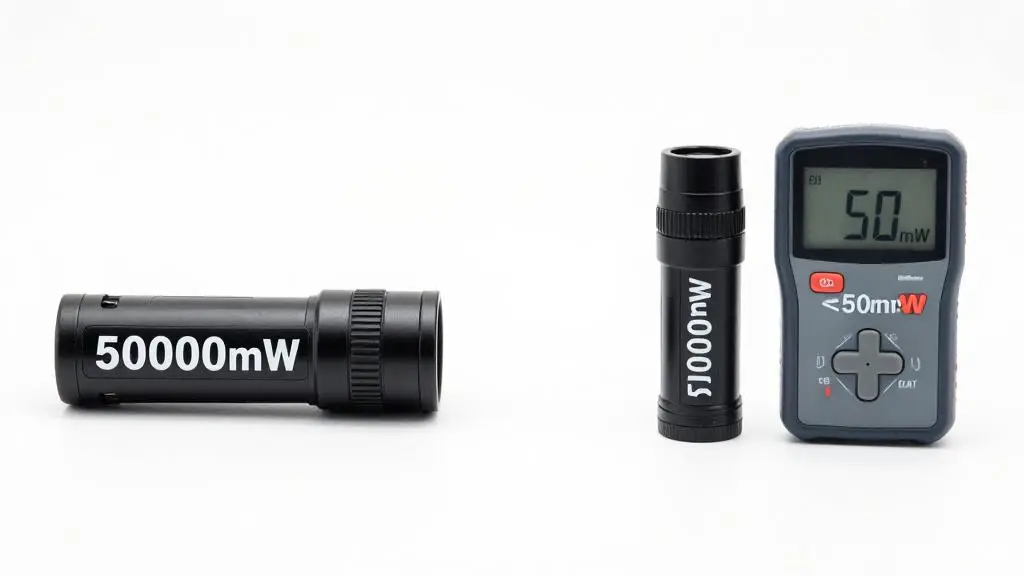
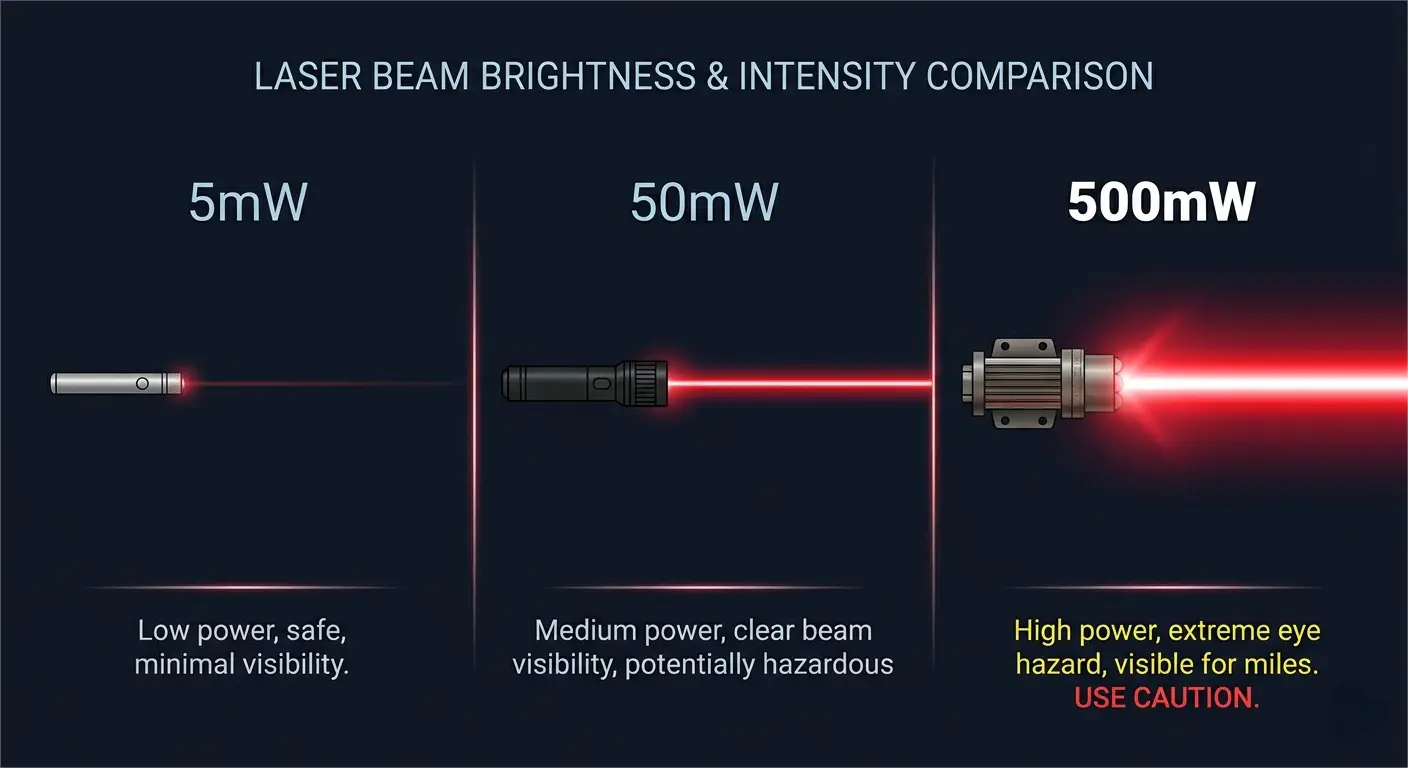
I’ve spent enough time around laser listings, supplier samples, and customer complaints to recognize the pattern fast: the bigger the number on the page, the shakier the truth behind it.
If you’ve ever searched for a 50000mW laser pointer scam, a “50W handheld,” or a “burning laser” that promises movie-level output, here is the part most sellers will never tell you: the label is usually doing the heavy lifting, not the laser.
This article is not about fear. It is about real laser power—what the hardware can actually do, why some listings are physically impossible, and how to protect yourself from fake specs, hidden infrared, and cheap marketing tricks.
Who this guide is for
This guide is for buyers who want a real laser pointer, not a fantasy number. It is also for parents, hobbyists, resellers, and anyone who wants to understand why two lasers with the same claimed wattage can behave completely differently.
The short version: when a listing screams 50000mW laser pointer scam, the safest response is to slow down and check the actual physics.
Looking for honest specs at honest prices? Our verified mW guide under $200 compares real output from named diodes — no fake numbers.
1. The physics ceiling: why handheld 50,000mW claims fall apart
Most high-power blue handheld lasers are built around single laser diodes, usually from Nichia or Sharp. The strongest common single-diode parts are still far below the numbers scam listings love to print.
| Model | Wavelength | Rated Optical Power | Max Overdriven Power |
|---|---|---|---|
| Nichia NUBM44 | 445nm | 6W (6,000mW) | ~7W |
| Nichia NUBM47 | 450nm | 7W (7,000mW) | ~7.5W |
| Sharp GH04C06V9G | 440nm | ~8W | 10.2W (peak test) |
These figures line up with the hardware reality described in Opt Lasers' NUBM44 page and with community testing on Laser Pointer Forums. The NUBM44 is widely treated as a 6W-class blue diode, while the Sharp 440nm part has been pushed to 10.2W in extreme test conditions.
That is the important part: 10W (10,000mW) is already an extreme edge case for a single diode in a handheld format. So when a random storefront claims 20W, 50W, or 50,000mW continuous output in a pocket-sized body, that is not an “optimistic spec.” It is a 50000mW laser pointer scam in plain sight.
Why the heat problem matters
Laser diodes waste energy as heat. The NUBM44 produces roughly 12W of waste heat while outputting 6W of light. In a tiny handheld tube, that heat has nowhere useful to go without serious cooling.
That is why real high-power handhelds top out where they do. Once you go beyond the normal thermal envelope, the diode degrades quickly, the output drifts, and the “power” on the product page stops matching the power in your hand.
2. The real-world comparison that makes the scam obvious
Here is the simplest way to think about real laser power:
- A genuine 6W to 7W handheld is already serious hardware.
- A stable 10W-class handheld is an extreme outlier.
- A “50W” or “50,000mW” pen-style laser is not a normal consumer product. It is a marketing story.
If a seller is claiming that kind of output from a small tube powered by a couple of batteries, you are not looking at a breakthrough. You are looking at a 50000mW laser pointer scam dressed up as innovation.
3. The numbers sellers use to fool power meters
One reason this scam survives is that some listings measure the wrong thing, or measure in a way that flatters the product.
Table 1: Real-world testing of scam lasers
| Product Description | Claimed Power | Measured Power (LPM) | Deception Factor |
|---|---|---|---|
| eBay "Gatling Gun" 445nm | 5,000mW (5W) | 1,125mW | 4.4x overstated |
| eBay 303-style 532nm green | <5mW | 112mW (total, including IR) | 22x+ overstated |
| eBay 405nm violet | <5mW | 40mW | 8x overstated |
| LaserPointerPro "50W" | 50,000mW | Physically impossible in handheld form | Pure scam |
Data source: Reddit r/lasers community testing and SmartCustomer reviews
The 405nm row shows the scam is not just a green-laser problem—it’s a labeling problem across the board.
The “LaserPointerPro 50W” line is even more blunt: there is no stable, believable handheld spec there. As one user put it: “A 50W handheld laser DOES NOT EXIST.”
4. Why blue looks weaker than green, even when the numbers are the same
This is where people get tricked by their own eyes.
The human eye is much more sensitive to green light than blue light. At the same wattage, green can look dramatically brighter. The standard visual efficacy values tell the story:
| Wavelength | Color | Lumens per Watt (lm/W) | Brightness vs 450nm |
|---|---|---|---|
| 450nm | Blue | 26 lm/W | 1x (baseline) |
| 520nm | Green | ~485 lm/W | ~18.6x brighter |
| 532nm | Green | 589 lm/W | ~22.6x brighter |
| 555nm | Yellow-green (peak) | 683 lm/W | ~26.3x brighter |
Source: HyperPhysics Visual Efficacy Data
Note: Different green wavelengths produce different brightness levels. 520nm appears about 18.6x brighter than 450nm, while 532nm can appear up to 22.6x brighter. That’s why the exact wavelength matters when comparing brightness.
So when a seller shows a blinding blue beam and says “look how powerful this is,” that is not proof of huge power. It may just be a wavelength that your eye reads poorly. A 1W blue laser looks about as bright as a 44mW green laser to the human eye.
5. Why “50,000mW” is especially absurd in a handheld body
At higher power levels, the safety category changes too.
The FDA says laser pointers in the visible range are limited to 5mW under the consumer pointer rules, and Class IIIb and Class IV products should be used only by trained individuals with a legitimate need.
That matters because the jump from low-power pointer to true high-power laser is not cosmetic. It is a completely different class of device.
| Class | Approximate Power | What it means |
|---|---|---|
| Class 2 | ≤ 1mW | Blink reflex usually protects the eye |
| Class 3R | 1mW–5mW | Still not a toy; direct viewing is risky |
| Class 3B | 5mW–500mW | Can injure eyes quickly; can burn dark materials |
| Class 4 | > 500mW | Can ignite materials; dangerous even from reflections |
Source: Laser Safety Facts
Once you are talking about true Class 4 territory, the product is no longer a casual pointer. It is controlled, trained-user equipment. A “50,000mW” claim is so far outside normal consumer reality that it’s not just a lie—it’s a safety hazard.
6. The infrared ghost: the oldest trick in the cheap green-laser playbook
This is the part that causes the most damage.
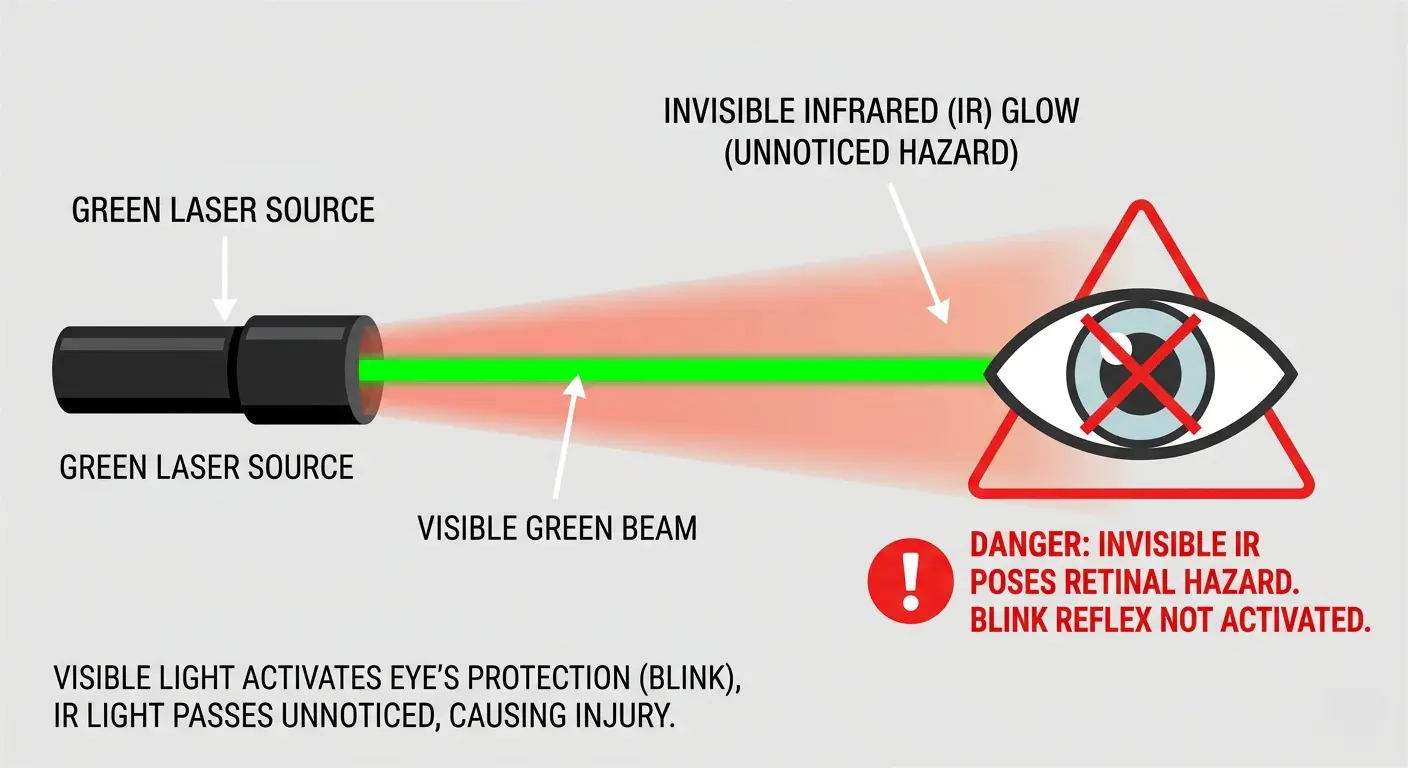
Cheap green DPSS lasers often rely on an 808nm pump diode, a crystal stage that converts to 1064nm, and then a doubling crystal that creates 532nm green. In a proper unit, an IR filter blocks the invisible leftover light. In a cheap one, the filter is missing or weak.
That means the beam can look weak in green while still leaking dangerous infrared energy.
What the NIST data actually says
The NIST study found that one inexpensive pointer produced dim green light but nearly 20mW of infrared radiation during normal use. That IR was enough to create a retinal hazard before the user realized anything was wrong.
The SPIE findings
SPIE research reported that in some cheap green pointers, the infrared components were 10 times more intense than the visible green light itself.
A simple real-world test
Reddit users have demonstrated a simple check: point a suspect green laser at a power meter, and you might read 112mW. Place a piece of ordinary glass in front of the beam (glass blocks some IR), and the reading drops to about 80mW. That 30mW drop is invisible, dangerous infrared.
That is why a cheap meter alone can be misleading. If the meter is not handling infrared correctly, it may reward the seller’s shortcuts instead of measuring the beam honestly.
7. Real comments and user complaints that match the physics
The best scams are the ones that sound plausible until you read the complaints.
Here are a few real reactions from SmartCustomer reviews:
“A 50W handheld laser DOES NOT EXIST.”
“They declare totally false values of output power.”
“My laser was 50,000mW... after 3 months it no longer works.”
“I waited 7 weeks to get an empty box.”
“My bank declined the transaction, and now they constantly sending me fake PayPal invoices.”
Those are not isolated grumbles. They are exactly what you would expect when a listing promises impossible real laser power and ships a cheap module with a fake label.
8. How to spot a fake in 30 seconds
If you only remember one checklist, make it this one:
- Check the power claim. Anything above 10W (10,000mW) in a small handheld body should trigger immediate skepticism.
- Check the wavelength. 532nm green and 450nm blue do not look equally bright at the same wattage.
- Check the safety hardware. A real high-power unit should have a key switch and safety features, not look like a toy flashlight.
- Check the price. If a “50,000mW” laser costs $49.99, the diode alone costs more than that. The math doesn’t work.
- Check the battery. A single 18650 battery cannot safely power a true 50W laser—it would overheat or explode.
- Check the paperwork. Real compliance with FDA 21 CFR 1040.10 matters more than flashy promo copy.
For a deeper buying guide, see Laser Pointer Power Guide: What Does mW Mean & How Much Do You Need?, then compare it with How Powerful is a Laser Pointer? Learn About Laser Power and Safety, and finish with Laser Pointer Safety Guide: Eyes, Kids, & Pets (Data-Backed).
The problem starts at the cheapest tier — our best laser pointer under $50 guide covers the NIST data on budget laser compliance and why a $27 pointer from an honest vendor beats a $15 "1000mW" Amazon gamble every time.
9. A note from the seller
I run LaserPointerHub. I sell in this market, so yes—I want to sell more. That part is obvious.
But here’s the thing I’ve learned after 20 years in this industry: I’d rather lose one sale than push someone into a bad one.
This business has too many people counting on the buyer not knowing the difference between a label and a real beam. They slap “50,000mW” on a $30 flashlight body and call it a day. Meanwhile, someone buys it thinking they’re getting a serious tool, and they end up with a dangerous toy that burns out in a month.
I’m not here to be the loudest marketer. I’m here to be the one who tells the truth—even when it costs me a sale.
The AI age makes it easier than ever to generate content, crunch numbers, and optimize for clicks. But it also makes it easier to hide behind slick copy and fake specs. My take is simple: use AI to learn faster, not to cut corners. Use it to ask better questions, not to settle for easier answers.
If you walk away from this article remembering one thing, let it be this: buy the right laser, know the real laser power, and don’t let a fake wattage number talk you into a mistake.
There are plenty of honest products out there. You don’t need to chase the loudest claim on the page. You need one that tells the truth.
10. The bottom line
A “50,000mW” handheld laser is not a normal consumer product. In most cases, it is a 50000mW laser pointer scam built on impossible specs, hidden infrared, or both.
If you remember nothing else, remember this:
- Real single-diode handheld power tops out around 7W–10W (7,000–10,000mW).
- Green can look up to 22x brighter than blue at the same wattage.
- Invisible infrared can make a weak laser look stronger than it is—and blind you in the process.
- Safety classes (Class 3B, Class 4) matter more than flashy advertising.
- Honest real laser power is the only number worth paying for.
Frequently Asked Questions
Can a handheld laser pointer really be 50,000mW (50W)?
No. For a pen-style or handheld laser, a claimed 50,000mW output is not credible. Real single-diode handheld designs max out around 7,000–10,000mW, and even that requires serious thermal management. Anything claiming 50W in a pocket-sized body is a scam.
Why does my laser pointer say 50,000mW but it can't burn anything?
That usually means the label is inflated, the beam is poorly focused, the output is pulsed (not continuous), or the listing is hiding the real laser power. The number on the page is not the same as the usable output in your hand.
Is a blue laser more powerful than a green laser?
Not by default. Power is measured in watts, regardless of color. However, blue can look much dimmer than green at the same power because the human eye is far less sensitive to blue wavelengths. A 1W blue laser appears about as bright as a 44mW green laser.
How can I test the real power of my laser?
Use a proper laser power meter (LPM). For green lasers, ensure the meter has an IR filter, or do the glass test: place a piece of ordinary glass in front of the beam. If the reading drops significantly (more than 20%), your laser has dangerous IR leakage and the “green” power is fake.
What are the dangers of infrared leakage in cheap green lasers?
Infrared leakage is dangerous because you cannot see IR, so your blink reflex does not protect you. NIST and SPIE both documented low-cost green lasers with invisible infrared output strong enough to cause retinal damage before the user realizes anything is wrong.